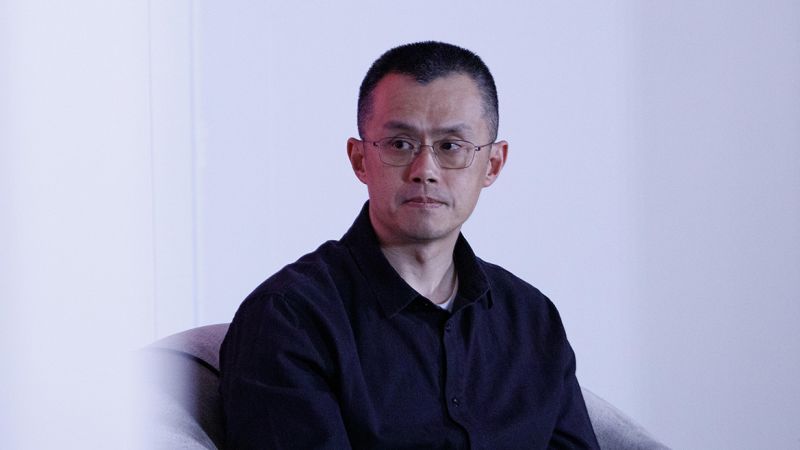
President Donald Trump has issued a pardon for Changpeng Zhao, the founder of Binance, who had pleaded guilty to a money laundering charge in 2023. The announcement came from White House press secretary Karoline Leavitt, who emphasized that Trump exercised his constitutional authority in this matter. She criticized the Biden administration’s prosecution as excessively harsh, a sentiment echoed by Trump and his advisors. This decision follows a lobbying effort by Binance that spanned several months.
This pardon could significantly impact Binance, the largest cryptocurrency exchange globally, potentially allowing it to resume operations in the United States. Notably, Trump, who had previously expressed skepticism about cryptocurrencies, has shifted his stance while campaigning for a second term, advocating for the U.S. to become the “crypto capital of the planet.” His family’s financial ambitions in the crypto space include establishing a firm called World Liberty Financial, which has forged links with Binance.
Estimates suggest that World Liberty Financial has significantly enhanced the Trump family’s wealth, potentially adding more than $5 billion in paper value—surpassing even the president’s real estate holdings. Earlier this year, an Emirati-backed investment firm, MGX, opted to utilize World Liberty’s stablecoin, USD1, for a substantial $2 billion investment in Binance, coinciding with the company’s lobbying efforts for Zhao’s pardon.
When questioned at a press briefing regarding allegations of corruption linked to the pardon, Leavitt maintained that the White House conducts thorough reviews of all pardon requests. She asserted that Zhao’s case was an example of excessive prosecution by the Biden administration, which she accused of being detrimental to the cryptocurrency industry.
Zhao’s legal troubles stemmed from his failure to maintain an effective anti-money laundering program, resulting in a four-month prison sentence and a $200 million fine. His company, Binance, faced a coordinated settlement with the federal government, agreeing to pay over $4 billion in various penalties amid admissions of violations related to money laundering and unlicensed money transmitting.
Zhao is not the only figure in the cryptocurrency domain to benefit from Trump’s clemency. Shortly after taking office, Trump pardoned Ross Ulbricht, known for establishing the infamous Silk Road marketplace. Additionally, Justin Sun, a Chinese billionaire who significantly invested in World Liberty Financial, had civil fraud charges against him dropped by the Securities and Exchange Commission earlier this year. Trump also pardoned three co-founders of BitMEX who pleaded guilty to anti-money laundering violations.
This development reflects a broader trend of high-profile pardons in the crypto space, indicating a shift in the regulatory landscape and the political capital associated with cryptocurrency ventures.