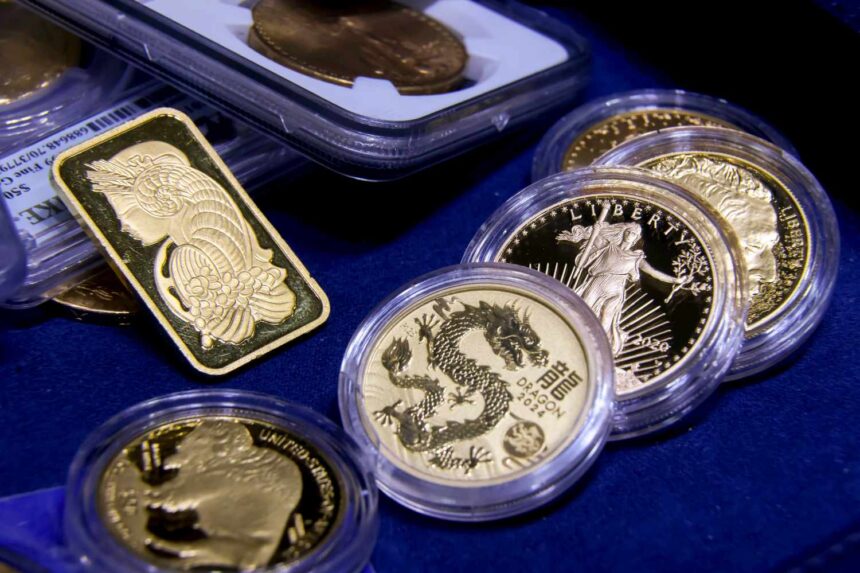
This week, the rally in gold prices came to a halt as some investors decided to capitalize on their profits. Despite this pullback, analysts remain optimistic about the underlying demand for gold, which continues to show signs of resilience. This decline, which saw gold prices plummet by 6% on Tuesday—the largest single-day drop in 12 years—has not dampened the bullish sentiment surrounding the metal.
The recent drop in gold was notable not only for its magnitude but also for its timing, occurring after months of record highs. Analysts assert that the structural factors driving gold’s impressive performance are still intact, particularly with increasing interest from central banks and investors seeking a hedge against economic uncertainty. Even after the significant decline this week, gold prices remain up an impressive 57% for the year, outperforming the benchmark S&P 500 stock index, which has gained just 15% in the same timeframe.
Several factors continue to fuel this demand for gold. Ongoing concerns regarding a potential U.S. government shutdown, trade tensions between the U.S. and China, and the sustainability of government debt have prompted many investors to view gold as a safe haven. J.P. Morgan emphasized this point in a recent note, suggesting that gold prices could find support in the $3,944 to $4,000 range per troy ounce, following a peak of nearly $4,400 earlier in the week. After a dip to $4,030, prices rebounded to around $4,160 by Thursday afternoon.
J.P. Morgan described the recent pullback as a necessary pause after a period of strong momentum and heavy inflows into the market. They expect that once this consolidation phase concludes, the long-term bullish trend for gold will resume. The firm predicts that both central banks and consumers will remain active buyers of gold during such price dips, underpinning future price increases.
Goldman Sachs echoed this sentiment, indicating that a recent easing of a short squeeze in silver supplies had notably impacted the gold market as well. Silver prices had surged to their highest level since 1980 last week, but the easing led to a decline. Goldman Sachs maintained a bullish $4,900 year-end price target for gold, citing ongoing structural buying as a key factor.
The positive sentiment around gold also extends to gold mining companies, which have enjoyed significant stock price increases this year. The Van Eck Gold Miners ETF (GDX) has surged nearly 120% year-to-date, while Newmont Corporation (NEM), the world’s largest gold miner, has seen its stock rise by an extraordinary 140%. With quarterly results expected soon, Newmont is poised to remain one of the strongest performers in the S&P 500.
In summary, while this week’s dip in gold prices may have caught the attention of investors, the broader consensus among analysts suggests that the fundamental drivers of gold demand remain strong, ensuring continued interest and support for both the metal and its associated mining companies.