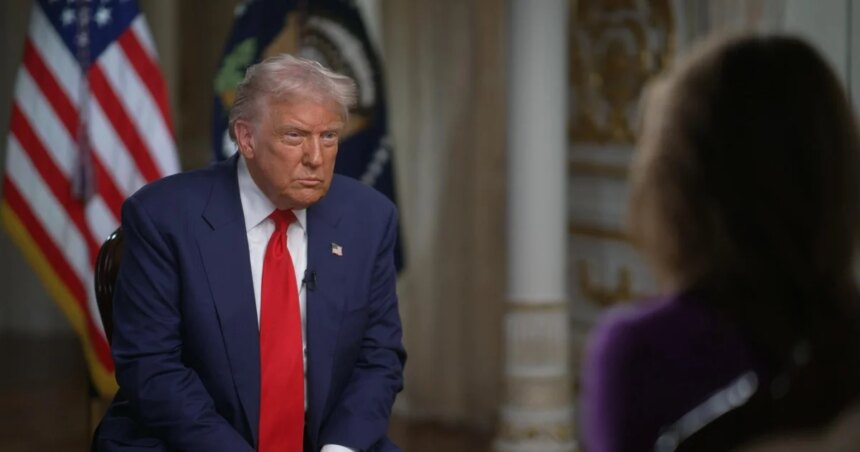
In a recent segment of “60 Minutes,” President Trump made headlines by stating that he does not know Changpeng Zhao, the founder of the cryptocurrency exchange Binance, whom he pardoned last month. During the interview, Trump repeatedly dismissed any personal connection to Zhao, asserting that he was merely a victim of political persecution orchestrated by the Biden administration.
“I don’t know who he is,” Trump told correspondent Norah O’Donnell, after she referenced Zhao’s previous legal troubles, which included a four-month prison sentence related to a money laundering charge. Trump characterized the legal actions against Zhao as a “Biden witch hunt,” indicating his belief that Zhao was unjustly targeted.
The interview also touched upon Binance’s role in facilitating a significant financial deal, specifically a $2 billion purchase of World Liberty Financial’s stablecoin earlier this year. This financial maneuver notably elevated the profile and value of World Liberty Financial, a company established by Trump’s sons, Eric and Donald Jr., among others. O’Donnell raised concerns about potential conflicts of interest and the appearance of “pay for play” surrounding the pardon.
In response, Trump claimed ignorance about the business dealings of his sons and maintained that he was focused on other matters. However, O’Donnell pressed him on the fact that Zhao received a pardon while his family was involved in the cryptocurrency business. Trump acknowledged that his sons were engaged in the industry and expressed support for their ventures, stating, “I’m glad they are, because it’s probably a great industry, crypto.”
Despite the connections, Trump’s sons and World Liberty Financial have publicly denied any wrongdoing or involvement in the pardon decision. Zhao, known as C.Z., had previously pleaded guilty to charges of facilitating financial activities that allegedly posed risks to U.S. national security, including accusations that he enabled terrorist groups to transfer significant sums of money. Following the pardon announcement, Trump reiterated his stance that Zhao was wrongfully convicted, stating, “He had a lot of support, and what they said that he did is not even a crime.”
The controversy surrounding the pardon and its implications continues to provoke debate, with questions regarding the intersection of personal interests and presidential decisions lingering in public discourse.