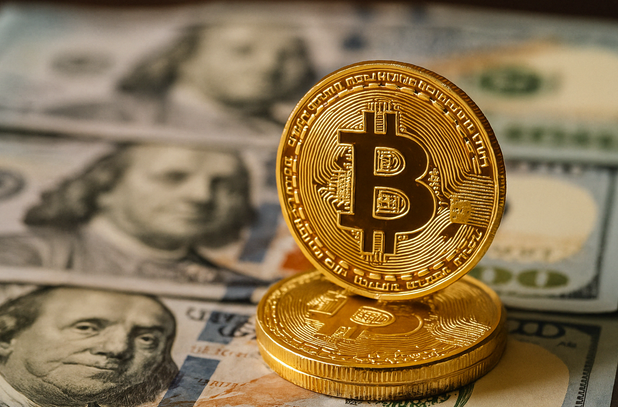
During a recent address at the America Business Forum in Miami, President Donald J. Trump unveiled an ambitious initiative aimed at establishing the United States as the global leader in cryptocurrency, particularly Bitcoin. He declared that his administration has successfully concluded what he referred to as the federal government’s “war on crypto,” signaling a significant shift in policy that seeks to foster innovation in the burgeoning digital asset sector.
Trump emphasized the importance of embracing crypto as a vital industry that could catalyze economic innovation within the U.S. He posited that Bitcoin and other digital currencies have the potential to alleviate some of the strain on the U.S. dollar, suggesting that a robust crypto market could provide much-needed support to the nation’s economy. “It takes a lot of the pressure off the dollar,” Trump remarked, while portraying the crypto industry as one rich with participation from prominent business leaders.
In stark contrast to the previous administration, Trump criticized the approach taken by President Biden, asserting that Biden had been “vicious on crypto” and had instigated legal actions that hampered the growth of the market. “They were going after these crypto guys,” he stated, while clarifying that his own legal issues are unrelated to his crypto advocacy.
The president described Bitcoin as central to the renewal of the American economy and its competitive standing on the global stage. He boldly proclaimed that the U.S. aims to become “the Bitcoin superpower, the crypto capital of the world,” framing this initiative as critical for maintaining technological leadership and competitiveness with countries like China.
Linking his cryptocurrency ambitions to advancements in artificial intelligence, Trump stressed the necessity of maintaining U.S. supremacy in both fields. He insisted that being at the forefront of tech-driven industries is vital for ensuring economic strength for the future.
Also noteworthy in Trump’s address was a mention of the White House’s creation of a Strategic Bitcoin Reserve, designed to manage assets resulting from federal seizures, in addition to a U.S. Digital Asset Stockpile aimed at achieving financial modernization. However, officials clarified that no government purchases of Bitcoin have been executed to date.
Trump called on Congress to advance legislation related to the cryptocurrency market, referencing the recently signed GENIUS Act, which establishes a framework for stablecoins. This act is seen as a step toward achieving greater regulatory clarity in the digital asset domain, while overarching market-structure legislation continues to make headway with the administration’s backing.
Moreover, Trump voiced his opposition to the establishment of a central bank digital currency, characterizing such a development as contrary to the principles of “crypto freedom” and the traditional strength of the dollar. Instead, he favored fostering private-sector growth in Bitcoin, viewing it as compatible with the U.S.’s economic leadership.
In his closing remarks, Trump warned about escalating competition from other nations, particularly China, in the digital asset landscape. “If we don’t do the crypto properly, China wants to do it,” he cautioned, asserting that U.S. leadership in Bitcoin is essential for maintaining both economic security and innovation leadership.
Under the directives of Trump’s administration, federal agencies are moving forward with the establishment of robust guidelines supporting the safe adoption of cryptocurrencies. Plans to expand collaborations with industry leaders have also been put forth to promote blockchain research and development, affirming that Bitcoin and its related technologies remain a foundational component of the president’s economic agenda.