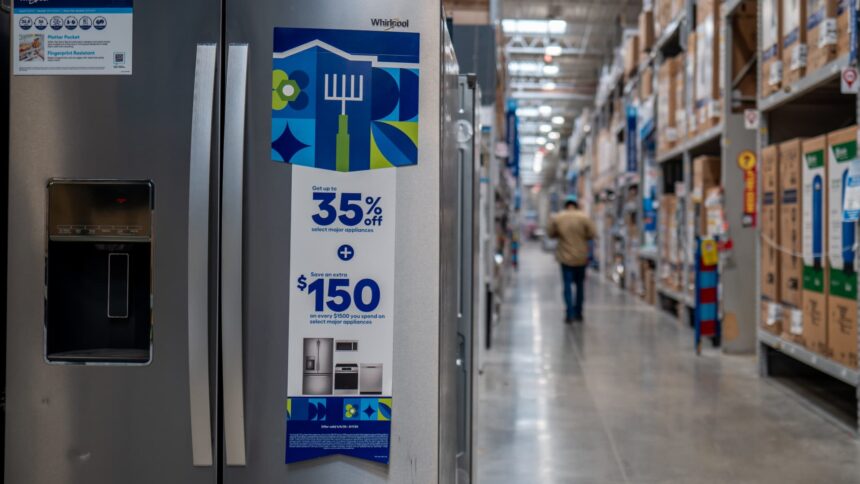
Whirlpool experienced a significant drop in its stock price on Thursday, following a stark warning from the appliance giant regarding the economic repercussions of the ongoing conflict in Iran. The company reported that the war has led to a substantial decline in the home appliance industry across the United States, likening the downturn to levels typically associated with a recession.
In its recent earnings filing, Whirlpool pointed to collapsing consumer confidence as a key factor affecting sales, especially in the months of February and March. This warning highlights a growing concern among corporations about the broader economic impact of geopolitical tensions, contrasting sharply with the stability reported by companies in sectors like travel and entertainment.
During morning trading, Whirlpool’s shares plummeted by 12%. CEO Marc Bitzer emphasized the company’s quick response to the deteriorating economic landscape, stating that Whirlpool had taken swift measures to adjust pricing and cut costs as conditions worsened. Bitzer articulated a sense of optimism regarding Whirlpool’s ability to remain competitive, particularly in light of new Section 232 changes that favor domestic manufacturers, suggesting the company is well-positioned with its range of American-made products.
In a significant shift, Whirlpool revised its full-year earnings forecast, halving its previous estimate from about $6 per share to a new range of $3 to $3.50 per share. Additionally, the company announced the suspension of its dividend, a strategic move aimed at reducing debt levels amid these challenging financial conditions.
Analysts from JPMorgan attributed the downward revision of Whirlpool’s earnings outlook to several factors: escalating raw material costs, an increased net tariff impact, and a decline in both pricing power and product mix benefits. This situation contrasts with reports from other companies like Uber and Disney, which have found no notable evidence of reduced consumer spending in travel or entertainment sectors.
Consumer confidence has been particularly affected, with surveys from the University of Michigan indicating a notable drop to record lows in April, coinciding with surging gasoline prices linked to the conflict in Iran. While the stock market has shown signs of recovery since mid-April on hopes of potential resolutions to the conflict, U.S. oil prices remain elevated, persistently above $90 a barrel, as market participants await further developments.
The outlook for larger-ticket items like washers, dryers, and kitchen appliances seems increasingly precarious, reflecting broader economic challenges stemming from geopolitical events. As Whirlpool navigates this volatile landscape, the company’s strategic decisions in pricing and product offerings will be pivotal in determining its path forward.