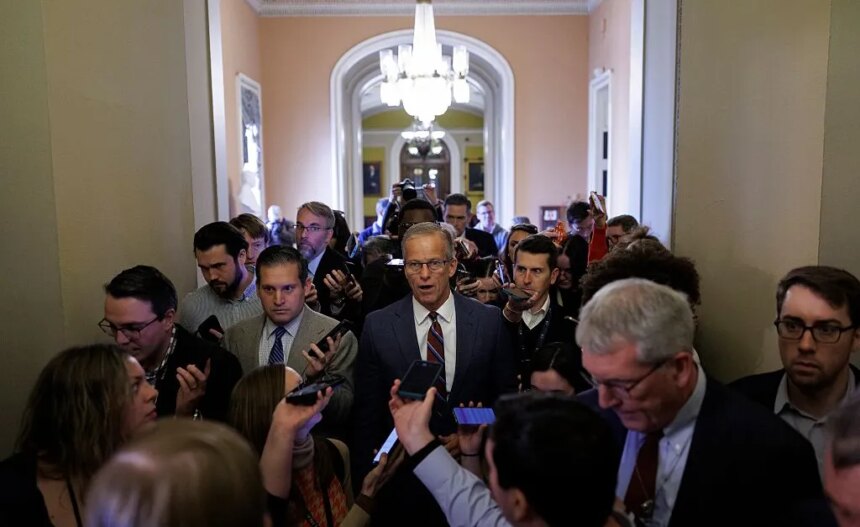
The longest government shutdown in U.S. history could soon be coming to an end, as eight Democratic senators are prepared to collaborate with their Republican counterparts in a significant compromise. This deal involves a critical concession regarding healthcare coverage, specifically the extension of federal subsidies for individuals purchasing health insurance on the Affordable Care Act (ACA) marketplace.
The deadlock primarily stems from the Republican Party’s refusal to agree to a key Democratic demand: the continuation of federal subsidies set to expire at the end of this year. These subsidies, introduced during the COVID-19 pandemic and subsequently extended by the Inflation Reduction Act in 2022, have been pivotal in making healthcare accessible. The Democratic Party has resisted passing a spending bill proposed by President Donald Trump until these subsidies are definitively extended. Republicans, on the other hand, have propagated misleading narratives about the Democrats’ demands while public opinion indicated that a majority blamed the GOP for the shutdown.
On Sunday, however, eight Democrats relented on the demand to extend the ACA subsidies, at least temporarily. In exchange, Senate Majority Leader John Thune, a Republican from South Dakota, committed to holding a vote in mid-December regarding an ACA subsidy extension that the Democrats can endorse.
While this deal effectively postpones the confrontation rather than resolving it, Democratic Senator Tim Kaine spoke in support of the agreement, asserting that it “guarantees a vote” on the extension of ACA premium tax credits. He expressed hope that this vote would ultimately lead to an extension of the vital financial assistance.
The impact of allowing the ACA subsidies to expire is potentially dire for millions of Americans. According to reports, around 24 million individuals were enrolled in ACA insurance plans by 2025, with a staggering 93% receiving tax credits to help reduce their healthcare costs. If these subsidies are lost, estimates suggest that premiums could double or even triple for approximately 22 million Americans who currently benefit from enhanced credits. A significant portion of these enrollees—about 57%—reside in Republican congressional districts.
Particularly vulnerable are older adults and seniors, who have greatly benefited from the subsidies. The provision of these financial aids led to a 50% decrease in the uninsured rate among individuals aged 50 to 64. The Congressional Budget Office estimates that the expiration of ACA subsidies could result in an additional 4 million people becoming uninsured, compounding an already critical situation.
The ramifications of such a spike in uninsured individuals could be far-reaching, affecting healthcare costs and straining hospital resources at both local and national levels. The increase in uninsured patients may lead to higher Medicare costs as these individuals often enter the program in poorer health, necessitating costlier care. Mark Shepard, an associate professor at Harvard Kennedy School, emphasized the subsequent pressures that would be felt by hospitals and local governments.
Insurance companies throughout the market are beginning to brace for the fallout from the subsidy expiration. The anticipated volatility could lead to rising premiums for anyone on the ACA marketplace. Furthermore, individuals relying on employer-sponsored insurance could face increased costs as companies respond to the pressure of higher healthcare costs through cost-cutting measures, potentially passing these expenses onto employees.
According to a September report from Mercer, the average total health benefit costs per employee are projected to climb by 6.5% in 2026, marking the most significant increase in over 15 years. In a survey involving more than 1,700 U.S. employers, 59% indicated they would implement cost-cutting changes to their healthcare plans as this trend continues.