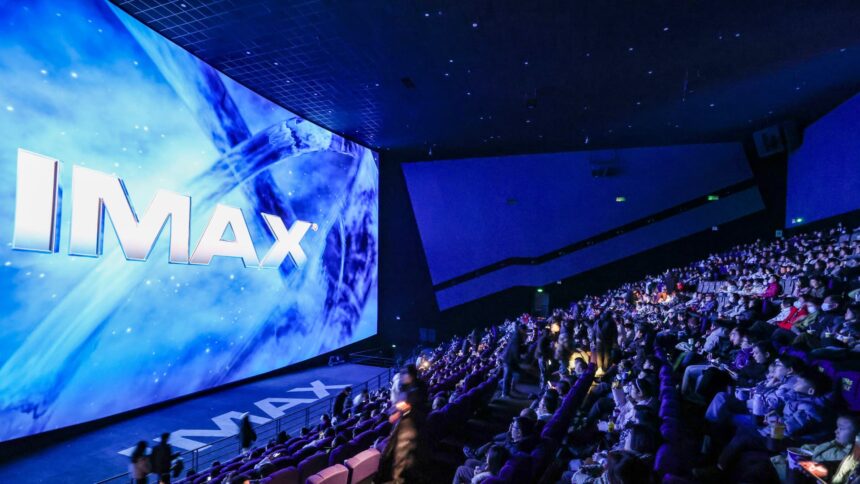
Moviegoers flocked to the IMAX GT Cinema in Guiyang on February 23, 2025, to catch the highly anticipated film Ne Zha 2, showcasing the ongoing popularity of the premium cinematic experience. Meanwhile, Wall Street has been abuzz with speculation regarding IMAX, the movie theater technology company, which is reportedly exploring potential acquisition opportunities.
On a day marked by notable activity, IMAX shares surged approximately 14%, driven by rumors of possible buyers. A source familiar with the situation disclosed to CNBC that IMAX has had “preliminary talks” mediated by intermediaries, although no formal proposals have been publicly put forth by the company. This development was first reported by the Wall Street Journal, generating heightened interest among investors.
Although CEO Rich Gelfond has not confirmed any active sales process, he has indicated a willingness to consider a buyout, noting at a recent investor day that IMAX holds considerable value both as a standalone entity and as part of a larger company. Analysts view IMAX as an appealing acquisition target, with many asserting that the company is currently undervalued in the market.
According to Alicia Reese, a Senior Vice President at Wedbush, IMAX represents a unique combination of a globally recognized brand, an asset-light licensing model, and an expanding earnings profile, yet its shares are trading below their potential value. As of midday trading on that particular Friday, shares of IMAX were priced at nearly $39, representing a market capitalization of about $2.1 billion.
Experts suggest that the pool of potential buyers could include private equity firms, major tech companies like Netflix and Apple, and even industry players like Sony. Reese pointed out that private equity would likely face fewer conflicts of interest compared to traditional Hollywood studios, which might hesitate to acquire IMAX due to competitive concerns regarding screen access.
The conversation around IMAX’s future comes on the heels of a robust year for the company, which generated a record $1.28 billion at the global box office in 2024, a significant increase from previous years. Analysts expect revenue growth to continue, forecasting an increase to $448 million by 2026. However, the stock hasn’t rebounded to pre-pandemic levels despite these positive indicators, with analysts setting a price target of $53 a share.
Recent performance has been impacted by film scheduling changes; notably, the company lost the highly anticipated Narnia film from its holiday lineup, leading to concerns about revenue gaps in the immediate future. Upcoming films, however, including Universal’s The Odyssey and Warner Bros.’ Dune: Part Three, are expected to drive box office sales significantly.
IMAX is also diversifying its offerings, expanding into international markets including partnerships for local language content in China, Japan, and South Korea. This strategy aims to reduce reliance on any single market, enhancing overall resilience.
As IMAX continues to push forward with expansion plans—projecting the installation of 160 to 175 systems by 2026—industry analysts remain optimistic about the company’s trajectory. The combination of premium viewing experiences, strong relationships with filmmakers, and a diverse film slate positions IMAX for continued growth and market relevance.