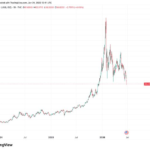
In a surprising turn of events following a recent decision by the Federal Reserve to cut interest rates, Bitcoin has experienced a notable decline. Typically, such rate cuts have historically prompted rises in cryptocurrency values as investors seek higher returns in riskier assets. However, after the Fed lowered long-term rates by 0.25% on October 29, Bitcoin reacted contrary to expectations, dropping approximately 4% the very next day and continuing its downward trend. By November 12, Bitcoin’s price had fallen to $101,667, marking a 10% decrease since the rate cut.
This price drop raises the question of whether this is just a minor fluctuation in Bitcoin’s notoriously volatile market or an indication of a more sustained downturn. A closer examination of Bitcoin’s recent price movements suggests that while the decline is significant, it may not be as alarming as it seems at first glance. Over the past two weeks, Bitcoin has declined by 10%, but such changes are not unprecedented. For instance, similar drops occurred in May and just before the previous Christmas, where Bitcoin’s price retreated by 8% and 10% respectively, both times also in response to economic factors unrelated to a long-term bearish outlook.
The context of these fluctuations is essential for understanding Bitcoin’s market behavior. The Fed’s rate changes are just one of many variables influencing the cryptocurrency landscape. In the past, significant external events—a Chinese ban on crypto trading, for example—have led to sharp declines in Bitcoin’s price, yet many of these episodes have eventually been overshadowed by recovery phases. In early October, Bitcoin reached an all-time high of $126,198, illustrating the cryptocurrency’s capacity for recovery despite recent setbacks.
Moreover, some significant advancements in the Bitcoin ecosystem may indicate a more resilient market moving forward. The introduction of spot-priced Bitcoin exchange-traded funds (ETFs) has opened the door for broader investments, coupled with increased regulation in the U.S. that legitimizes the cryptocurrency market. Institutional investors are also becoming more involved, further signalling a maturing market.
In addition, Bitcoin miners have begun adapting their strategies to sustain operations during challenging market conditions. Companies like MARA Holdings, Riot Platforms, and Cipher Mining are diversifying by selling electricity and data center space to artificial intelligence entities when it isn’t feasible to mine Bitcoin profitably. This development could ease some of the pressure on Bitcoin’s price and add more stability to the market.
While the future of Bitcoin remains uncertain, the combination of institutional adoption, regulatory advancements, and innovative mining practices suggests that this recent downturn may not be the beginning of a drastic decline. Many continue to believe in Bitcoin’s long-term potential, and as the cryptocurrency narrative evolves, its market behavior may reflect less volatility in the future, potentially providing a buffer against severe fluctuations triggered by macroeconomic adjustments.
In summary, despite the current price drop, many remain optimistic about Bitcoin’s trajectory, viewing this latest decline as part of the natural ebb and flow of the cryptocurrency market rather than a catastrophic event. As investor sentiment evolves and the cryptocurrency landscape matures, the path ahead for Bitcoin could remain promising—even amidst short-term turbulence.