Nvidia has recently reported impressive earnings and optimistic forecasts, which analysts interpret as a clear indicator of sustained investment in AI infrastructure. However, uncertainty remains regarding whether these results can alleviate concerns about a potential AI bubble in the market. There is growing apprehension that the extensive investment in AI from major technology firms may exceed realistic returns, prompting industry experts to speculate about the possibility of an AI bubble.
While Nvidia’s performance is regarded as a significant reflection of the AI sector’s vitality, some analysts caution that it may not encompass the entire narrative. Gil Luria, the head of technology research at D.A. Davidson, emphasized that, while the market may feel reassured by Nvidia’s results, broader concerns about the AI landscape persist. He pointed out that worries related to an AI bubble stem not solely from Nvidia’s activities but from companies accruing substantial debt to construct data centers.
Nvidia’s AI chips, particularly its graphics processing units, are crucial for data centers, which require immense computational power to train and operate AI applications. Major tech firms like Microsoft, Amazon, Google, and Meta have indicated intentions to enhance their spending on AI chips, a factor reflected in Nvidia’s latest earnings. This surge in demand has positively impacted Nvidia’s supply chain, with its key suppliers in Asia experiencing stock increases.
Despite this positive outlook, Luria warned that the speculation surrounding data centers poses risks, particularly as these investments are typically financed through debt. He articulated concerns that, as demand stabilizes, the debt incurred by hyperscalers—companies that own large-scale data centers—may lead to a reckoning in the coming years as industry capacity is fully realized.
Several analysts have drawn distinctions between companies that manufacture AI chips, like Nvidia, and those that utilize these chips to develop AI models, including firms like OpenAI. Billy Toh, from CGS International Securities Singapore, noted that while Nvidia’s earnings indicate growth in AI infrastructure spending, they do not necessarily reflect broader economic stability in the AI sector. He suggested that evaluating the actual adoption and profitability of AI services by major platforms, such as Microsoft and Adobe, provides a clearer understanding of the industry’s sustainability.
Concerns about organizations like OpenAI demonstrating low revenue relative to their hefty expenditures contribute to the climate of unease among investors. Unlike these AI developers, Nvidia benefits from its stronghold in the advanced chip market, allowing it to maintain pricing power and stable demand. Toh remarked that, despite potential struggles among AI startups, Nvidia’s diverse customer base, including hyperscalers and government AI projects, solidifies its position and justifies its substantial market capitalization.
Rolf Bulk of New Street Research acknowledged the distinctiveness of Nvidia’s results while asserting that they may help alleviate fears of an AI bubble in the short term. He indicated that the consistent demand for computing resources from hyperscalers is indicative of strong growth prospects extending into 2026 and beyond. Nonetheless, he stressed the necessity for effective utilization of GPUs to ensure returns for these companies.
In the broader context, advocates of AI remain optimistic, viewing Nvidia’s earnings as a reaffirmation that the market is not experiencing a bubble but rather is at the onset of a transformative era. Some, like Ray Wang, chairman of Constellation Research, asserted that Nvidia’s substantial bookings signal a robust future for AI, while Dan Ives of Wedbush Securities labeled Nvidia’s results a pivotal indicator that dispels fears of an AI bubble.
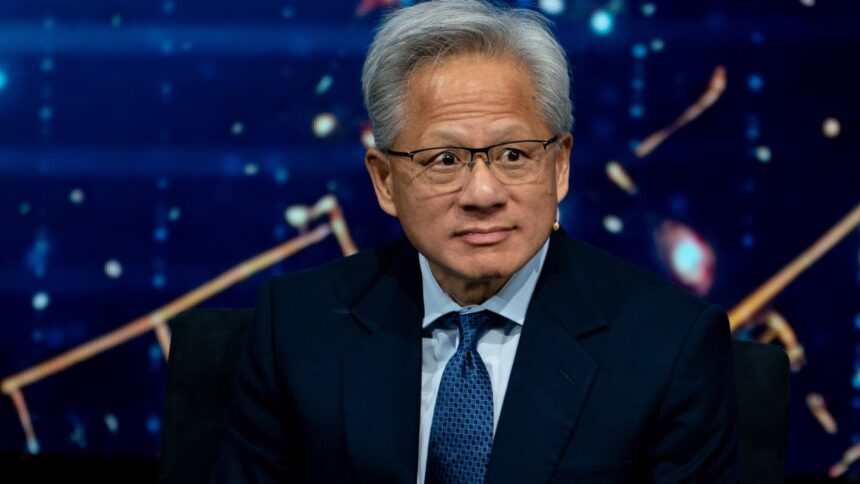
Amidst the questions about the industry’s outlook, Nvidia CEO Jensen Huang addressed concerns directly during the earnings call, asserting that the current climate reflects a different reality than an imminent bubble. The responses to Nvidia’s earnings will likely shape market sentiment as investors navigate the dual narratives of growth and risk in the evolving landscape of AI technology.