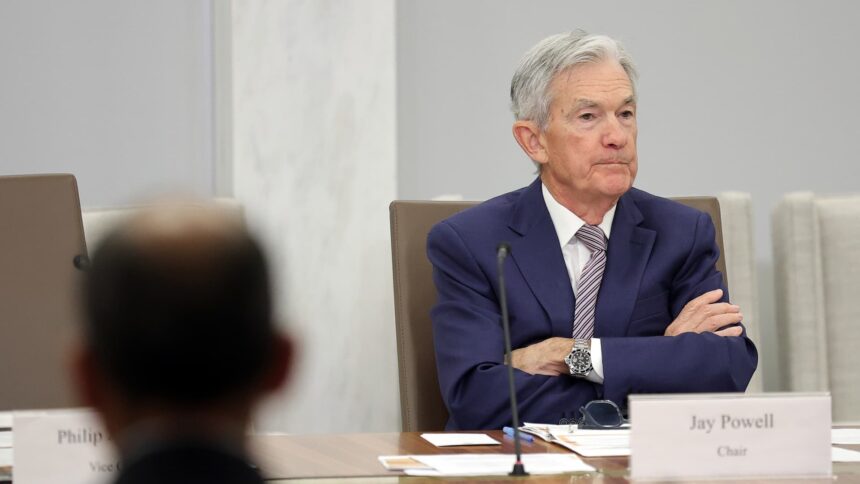
Federal Reserve Chair Jerome Powell is navigating a turbulent landscape as speculation mounts regarding his tenure at the helm of the central bank. Recently, prediction markets platform Kalshi reflected varying expectations about his immediate future, with bettors assigning a 30% probability that Powell might resign from the Board of Governors by June. However, that sentiment shifts significantly when looking toward later in the year: there is a 66% chance he resigns by August and an 81% likelihood by year’s end.
Powell previously indicated after the March Federal Open Market Committee meeting that he would remain in his position until the resolution of an inquiry by the Department of Justice concerning him. However, a recent development saw the Justice Department drop its investigation, leading to a spike in the odds of his resignation by June, which reached nearly 54.5% post-announcement. These odds, however, have since decreased again.
Contrastingly, predictions on Polymarket anticipate a more imminent departure for Powell, with an 87% likelihood he will step down between May 15 and May 22. Amid these discussions, Powell is scheduled to hold a press conference following the Fed meeting on Wednesday. This event could mark his final appearance as chair, contingent on the approval of President Donald Trump’s nominee, Kevin Warsh, who recently advanced through the Senate Banking Committee.
Tensions between Powell and the Trump administration have been evident, particularly regarding the central bank’s approach to interest rate cuts, which the White House feels has not been aggressive enough. Concerns linger that Warsh’s nomination is part of a strategy to align the Fed more closely with the administration’s economic goals, although Warsh himself has asserted his commitment to the Fed’s independence.
Should Powell remain until August, he could preside over two additional meetings: one in June and another in late July. His current term as a Governor extends to 2028, raising questions about his longer-term plans and the implications of his potential resignation on the Fed’s policy trajectory. The unfolding scenario not only captures the attention of financial markets but also underlines the critical relationship between central banking and political pressure.