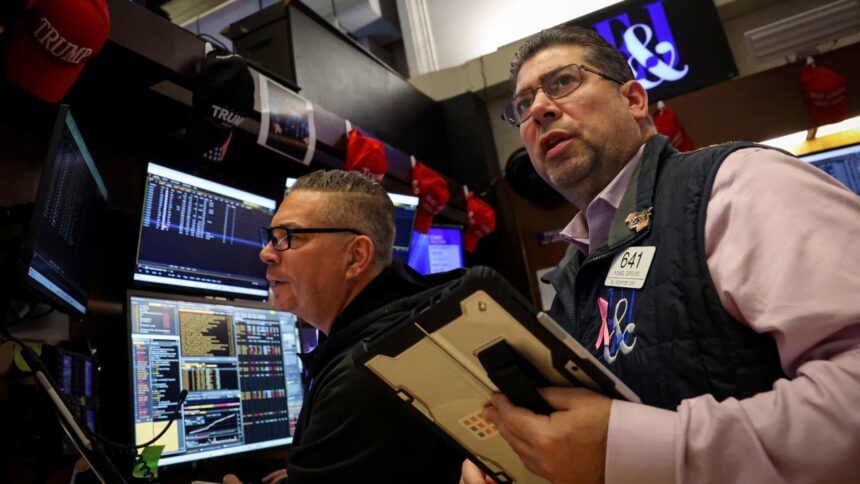
U.S. stock markets experienced significant volatility on Thursday, showcasing one of the most dramatic mood swings in recent months. The Nasdaq Composite closed down 2.16%, reversing an earlier gain of as much as 2.6%. Similarly, the S&P 500 ended the day down 1.56% after briefly rising 1.9%, while the Dow Jones Industrial Average also mirrored this trend, finishing 0.84% lower from an intraday peak of 1.56%.
At the heart of this market turbulence was Nvidia, a prominent player in the AI chip sector. Nvidia’s shares soared by 5% at one point during the trading session but ultimately fell to close down 3.2%. Other technology stocks with ties to AI, such as Oracle and AMD, exhibited comparable volatile patterns, indicating that investors initially reacted favorably to Nvidia CEO Jensen Huang’s dismissal of an “AI bubble” narrative. However, that renewed optimism quickly faded as underlying concerns resurfaced.
Contributing to the market’s strain was the release of September’s U.S. jobs report. Although the data released was two months delayed and may not reflect the current economic landscape, it nonetheless surpassed expectations, reporting a net gain of 119,000 jobs—well above the Dow Jones consensus estimate of 50,000. Unemployment did rise to 4.4%, up from 4.3% in August, marking the highest level in nearly four years. This better-than-expected jobs data curtailed hopes for an imminent interest rate cut, as traders began to align their expectations with the likelihood that the U.S. Federal Reserve would maintain current interest rates into December.
With the specter of stretched valuations hovering over the market and one less rate cut on the horizon, investors are now grappling with the reality that anticipated holiday cheer may be less generous than previously thought.
Meanwhile, the fallout for Bitcoin also continued as it fell to its lowest price since April, furthering concerns in the cryptocurrency market. In contrast, Europe’s Stoxx 600 managed to gain 0.4%, buoyed by some AI-related stocks like ASML and BESI showing slight upticks.
Jensen Huang’s sentiments during Nvidia’s earnings call, where he rejected fears of an AI bubble, were echoed by CFO Colette Kress’s reaffirmation of the company’s ambitious revenue forecast of “half a trillion.” However, she noted that orders from China during the quarter had been “insignificant,” raising questions about future growth prospects.
Ray Dalio, founder of Bridgewater Associates, weighed in on the market dynamics, suggesting that while a bubble might be evident, there was no immediate danger of it bursting. He advised investors to maintain their positions despite the unsettling market signals.
Activist investor Boaz Weinstein also highlighted the potential for opportunities amid valuation mismatches in UK investment trusts, suggesting that there may be hidden value in a challenging investment landscape.
As analysts continue to scrutinize Nvidia’s performance, concerns remain about the broader health of the AI industry. Some experts pointed out that the risk may not be directly associated with Nvidia but rather with the financial practices of downstream companies, which may be accumulating excessive debt to build data centers in the rapidly evolving AI sector.