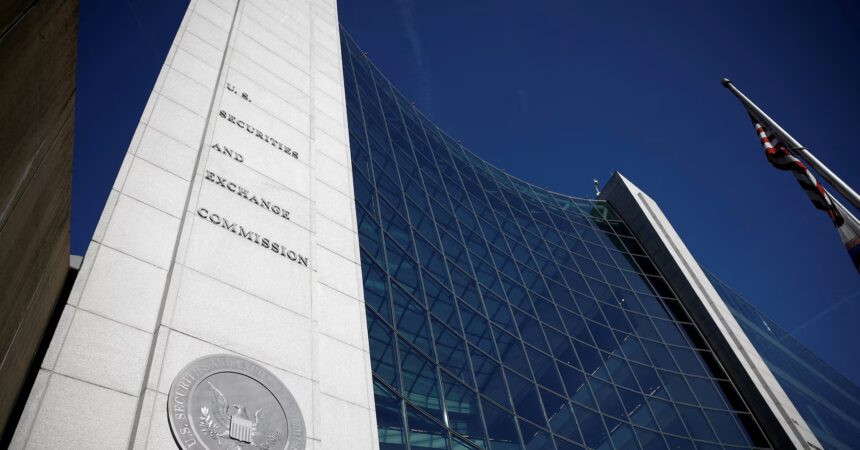
A group representing major stock exchanges has expressed concerns regarding a potential regulatory exemption being considered by the Securities and Exchange Commission (SEC) for cryptocurrency companies. This exemption would allow these firms to sell “tokenised” stocks, which are digital representations of shares in traditional equities, potentially putting investors at greater risk.
In a recent letter addressed to the SEC, the World Federation of Exchanges (WFE) highlighted the dangers associated with granting such exemptions. The exchanges contend that allowing companies to sidestep established regulatory frameworks could undermine market integrity and weaken protections for investors—a stance reinforced by WFE’s CEO, Nandini Sukumar. She emphasized that the SEC must be cautious and avoid enabling firms that seek to bypass the regulatory principles that have safeguarded financial markets for many years.
Currently, crypto companies wishing to offer tokenised stocks to U.S. investors without registering as broker-dealers would require a no-action letter or exemption from the SEC. The SEC’s Chair, Paul Atkins, has indicated that the agency is considering an “innovation exemption” to promote experimentation within the crypto industry.
Despite expressing a general belief in innovation, the WFE’s letter reflects an acknowledgment of the evolving competitive landscape. The ease of access via tokenised stocks could pose challenges for traditional financial institutions, especially as they themselves are exploring how to adapt to the rising prominence of cryptocurrency.
Tokenising stocks typically involves the creation of crypto tokens that are linked to existing equities, offering retail investors exposure to the stock market without the need for direct ownership. Proponents argue that integrating blockchain technology into equity markets can enhance trading efficiency. However, WFE representatives remain skeptical, noting that traditional equity markets already operate with high efficiency, questioning whether the costs associated with shifting to a blockchain-based system would yield significant benefits.
While the SEC has yet to comment on the WFE’s letter, it was highlighted on the agency’s website. The recent discourse illustrates an ongoing tug-of-war between the traditional finance sector and cryptocurrency advocates, showcasing the increasing scrutiny on digital asset operations as regulatory frameworks evolve.
As the conversation continues, it becomes clear that the balance between fostering innovation in the financial sector while ensuring investor protection will remain a central theme in upcoming regulatory discussions.