As January drew to a close, two teenagers from the coastal community of Pismo Beach set off for Scottsdale, Arizona, embarking on a long overnight drive. Skylar LaPaille and Jackson Sullivan, now facing serious legal troubles, find themselves caught in a web of allegations involving a brutal home invasion that centered around cryptocurrency. Their journey, which began with youthful aspirations, has spiraled into a significant legal battle, and both young men could be facing decades behind bars if convicted.
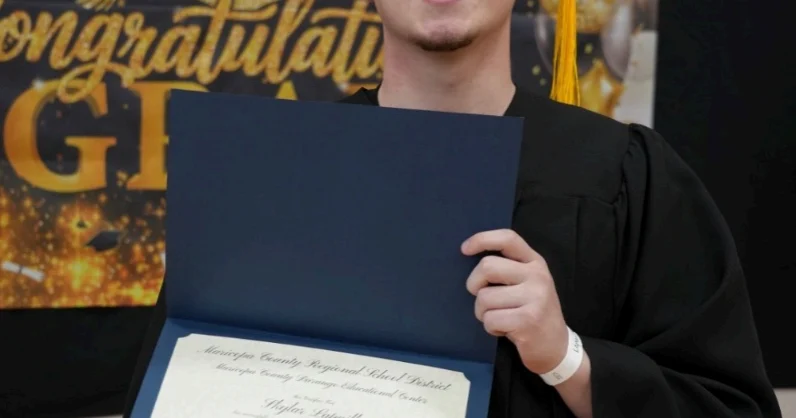
LaPaille and Sullivan are currently detained, awaiting trial on multiple felony charges, including burglary and kidnapping. As anticipation builds for a summer trial, the reality contrasts starkly with the carefree lives they once led. LaPaille, who was forced to leave his Pacific Beach High School before graduation, has since earned a GED while detained.
Defense attorneys for both teens are pushing for changes to their release conditions, advocating for LaPaille’s return to California. LaPaille’s lawyer argues that the 17-year-old was coerced into committing the crime under threat to his family. LaPaille reportedly informed authorities about a mysterious figure known only as “Red,” who allegedly forced him to participate in the invasion. In contrast, Sullivan has maintained silence, refusing to engage with police during his arrest.
After their apprehension on January 31, police reports document a high-speed chase that ended in a sushi restaurant parking lot. While both teens initially faced a bail set at $50,000, Sullivan’s mother managed to secure his release, placing him under electronic monitoring, but with restrictions that prevent him from leaving the county. LaPaille’s pleas for release have not garnered similar support; no one came forward to post his bail, which remains at $50,000.
The traumatic home invasion incident involved LaPaille and Sullivan allegedly posing as delivery drivers to gain access to a wealthy victim’s home, where they reportedly demanded a staggering $66 million in cryptocurrency. Court documents suggest that this home invasion was not an isolated incident; the victims had been subjected to extortion attempts months prior.
In their filings, LaPaille’s defense highlights the lack of a criminal history and asserts that his actions stemmed from coercion by online figures threatening his family. They emphasize his commitment to rehabilitation, showcasing achievements like obtaining a high school diploma and progressing to college courses while in detention. LaPaille’s attorney argues that remaining in Arizona contributes to his isolation and lack of support, as his family resides in California.
Conversely, Sullivan’s family situation has also prompted his attorney to request modifications to his release, as they currently face challenges maintaining living arrangements due to the constraints imposed by the court. Sullivan has been actively participating in school while under monitoring but expresses a desire to return to California to complete his education.
Both defense teams face opposition from the Maricopa County Attorney’s Office, which underscores the gravity of the charges against the teenagers and the need for accountability. The prosecution describes the profile of the victims, emphasizing their ongoing trauma and fear resulting from the violent nature of the crime.
The legal complexities surrounding the case have resulted in motions being filed to reconsider the terms of LaPaille’s and Sullivan’s release, but the prosecution remains adamant about the necessity of imposing strict measures to prevent potential witness tampering and to ensure they face trial in Arizona.
As these young defendants navigate the legal system, the ramifications of their alleged actions loom large, potentially altering the course of their lives permanently. The trials ahead may reveal more details about the circumstances leading to the home invasion and the intricate networks of threats surrounding cryptocurrency. Both sets of attorneys are preparing for a summer showdown in court, as the quest for justice unfolds amidst concerns for the victims and the future of these two former teenagers from California.