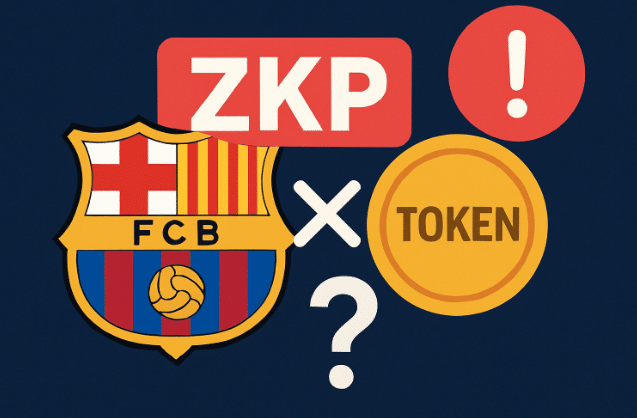
FC Barcelona has found itself embroiled in controversy following its recent partnership with Zero-Knowledge Proof (ZKP), a Samoa-based firm designated as the club’s “Official Cryptographic Protocol Partner.” Announced on November 14, the three-year agreement aimed to bolster the club’s financial stability through a focus on data privacy and security. However, just days later, the partnership sparked widespread criticism as the club sought to distance itself from a digital token that ZKP began promoting shortly after the deal’s announcement.
As fans raised concerns about ZKP’s governance and the rationale behind the partnership, FC Barcelona issued a statement on November 26 to clarify its position. The club asserted that it has “no connection whatsoever” to ZKP’s token and emphasized that the agreement did not involve any token-related activities. The statement marked an attempt by the club to protect its reputation while maintaining the terms of the sponsorship agreement.
Critics, including football watchdogs and former Barcelona officials, expressed their apprehensions about the lack of transparency surrounding ZKP. Martin Calladine, a journalist specializing in cryptocurrency in sports, voiced concerns over the potential risks to fans, suggesting they could be misled into investing in tokens that might ultimately hold little value. Former Barcelona director Xavier Vilajoana has called for clarity on how the club vetted the partnership from the outset.
Despite ZKP promoting a token sale that led some observers to believe the club was endorsing an untested financial product, FC Barcelona has reiterated that it holds no responsibility for the token’s creation or management. They pledged to provide updates as they obtain “conclusive information” about ZKP.
The controversy has underscored the delicate financial situation facing FC Barcelona, which is reportedly grappling with hundreds of millions of euros in debt, alongside substantial loans related to stadium renovations. This context emphasizes the urgency for the club to secure new revenue streams, making partnerships with emerging digital entities particularly appealing, yet fraught with risk.
This situation has not only drawn parallels to previous missteps in the crypto space, such as the club’s withdrawal from an NFT collaboration with Ownix in 2021 following legal troubles linked to the project. In 2022, FC Barcelona inked a separate deal with the crypto exchange WhiteBIT, part of a broader initiative to expand into digital ventures. The club’s ongoing challenges illustrate both the opportunities and perils inherent in aligning with new and unproven cryptocurrency ventures.