Thousands of Airbus aircraft have reportedly resumed normal operations after being temporarily grounded due to concerns that solar radiation could disrupt onboard flight control computers. Airbus, the French aerospace manufacturer, indicated that approximately 6,000 of its A320 fleet were impacted, necessitating swift software updates for most while about 900 older models require a more significant computer replacement.
French Transport Minister Philippe Tabarot confirmed that the majority of updates were executed smoothly, affecting over 5,000 planes. He noted that fewer than 100 aircraft still awaited the necessary update, highlighting the rapid response to the situation. “Software updates were already rolled out overnight on virtually all devices,” Tabarot stated.
Despite the swift resolutions for many airlines, some disruptions were reported. On Saturday, Air France faced delays and cancellations for several flights operating out of Paris’s Charles de Gaulle Airport. The timing of the issue coincided with the busy Thanksgiving weekend in the United States, complicating matters further.
American Airlines acknowledged that 340 of its planes were affected, leading to anticipated operational delays. However, the airline added that the majority of updates were completed by Friday or Saturday. Delta Airlines downplayed the situation, indicating that the impact on its operations would be minimal.
In the United Kingdom, airport disruptions were relatively limited. London’s Gatwick Airport experienced some interruptions, while Heathrow reported no cancellations. Manchester Airport indicated it did not expect significant problems. British Airways and Air India also appeared to be largely unaffected.
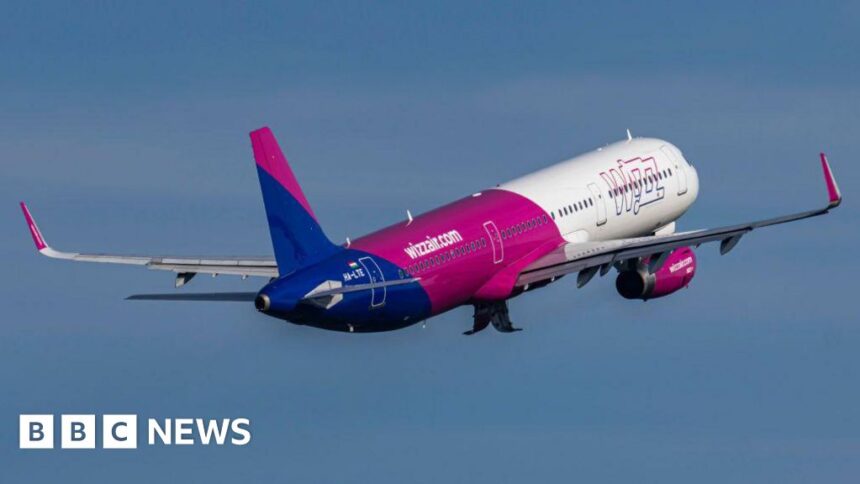
On Saturday, Easyjet announced that it had successfully completed updates on a substantial portion of its fleet, allowing it to operate as scheduled. Wizz Air confirmed that its operations remained unaffected, having implemented the necessary updates overnight.
Conversely, Australia’s Jetstar airline faced significant challenges, canceling 90 flights as a result of around one-third of its fleet being impacted. Disruptions were expected to continue throughout the weekend, even though many aircraft had received the necessary software updates.
The issue was first identified following an incident in October involving a JetBlue Airways flight that experienced a sudden loss of altitude, necessitating an emergency landing. Investigators found a problem with the aircraft’s computing software that calculates elevation data, revealing that high-altitude flights could potentially suffer from data corruption due to intense solar radiation.
In addition to the A320 series, other Airbus models such as the A318, A319, and A321 were also affected. While around 5,100 planes could be made operational with software updates, the 900 older models requiring computer replacements would remain grounded until the issue is resolved. The timeline for resolving this depends on the availability of the necessary replacement components.