China’s economic growth has experienced a notable deceleration in the third quarter of the year, growing by just 4.8% compared to the same period in 2024, as reported by official figures released on Monday. This marks the slowest pace of growth in a year and represents a decline from the 5.2% growth recorded in the second quarter.
The weakening in growth is attributed, in part, to escalating trade tensions with the United States. Recently, China implemented extensive controls on the export of rare earths—critical minerals important for global electronics production—a decision that has disrupted the fragile trade truce established with the US. These economic figures are anticipated to influence discussions among China’s top leaders this week regarding the country’s economic strategy for the period from 2026 to 2030.
Despite the slowdown, China’s National Bureau of Statistics emphasized the economy’s “strong resilience and vitality,” citing the technology sector and business services as significant contributors to growth. Beijing has maintained a target of approximately 5% economic growth for the year and has managed to avert a sharp economic downturn through various government support measures.
In a swift response to China’s rare earth export controls, US President Donald Trump threatened to impose an additional 100% tariff on imports from China, indicating ongoing tensions. Meanwhile, US Treasury Secretary Scott Bessent has expressed intentions to meet with Chinese officials in Malaysia to alleviate these tensions and facilitate a potential meeting between President Trump and Chinese President Xi Jinping.
Prior to the recent escalation, Chinese businesses capitalized on the brief trade truce with the US, leading to a notable 8.4% increase in exports in September. Additionally, there was also an increase in the total value of imports into China.
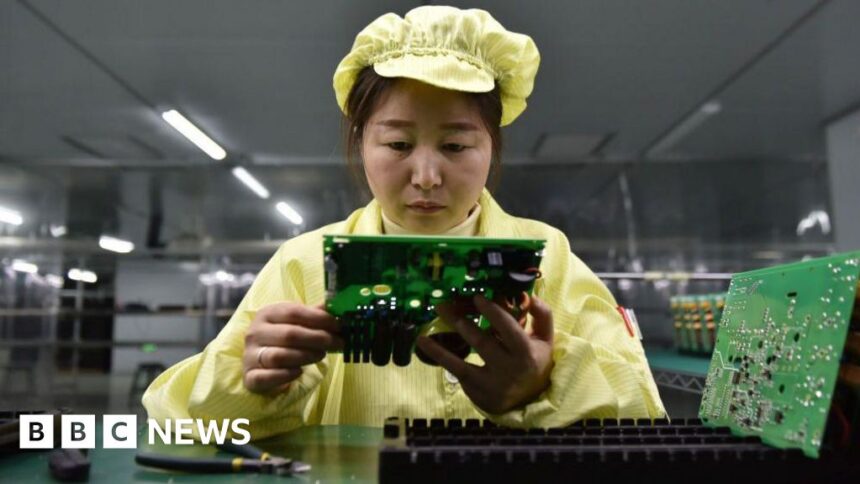
On the industrial front, China’s industrial output recorded a growth of 6.5% year-on-year, with standout performances reported in sectors such as 3D printing, robotics, and electric vehicles. The service sector, encompassing IT support, consultancy, and transport and logistics services, also demonstrated growth, reflecting a diverse economic landscape despite the persisting challenges.