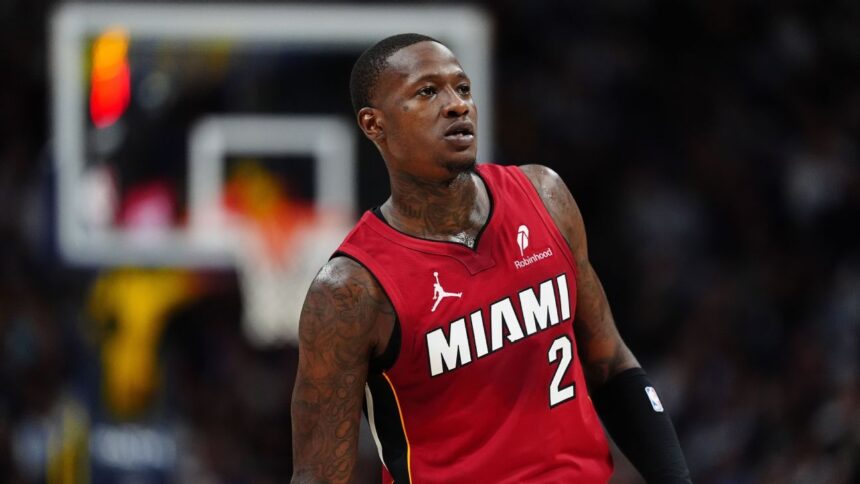
On Monday afternoon, the sports world turned its attention to a federal courthouse in Brooklyn as Miami Heat guard Terry Rozier faced arraignment. The seasoned player is embroiled in a significant investigation related to illegal sports betting. Rozier, who previously played for the Charlotte Hornets, is accused of engaging in a betting operation that leveraged insider NBA information. This scrutiny follows suspicious prop betting patterns associated with his performance during a game against the New Orleans Pelicans in March 2023. Although the league subsequently conducted an investigation and determined that Rozier had not violated NBA rules, his legal troubles intensified after an arrest in October.
During Monday’s proceedings, the 31-year-old Rozier entered a plea of not guilty. As the case unfolds, it has raised several concerns and questions regarding the implications for the Miami Heat and the broader NBA landscape. Notably, the circumstances surrounding Rozier’s trade from the Hornets to the Heat have come under scrutiny. The trade, executed on January 23, 2024, involved a future first-round pick and seasoned guard Kyle Lowry. At the time, Miami was pursuing another deep playoff run. However, sources within the team indicated that they were unaware of the ongoing investigation when the deal was finalized.
The implications of Rozier’s legal issues are further complicated by the NBA’s investigation protocol. After learning about the inquiry from a Wall Street Journal report in January 2025, the Heat expressed discontent over the lack of disclosure. The key question remains: Should the league have informed Miami about the investigation during the trade negotiations? NBA protocol requires teams to disclose material information during trade discussions, but interpretations of what constitutes “material information” vary. While some executives argue that the investigation should have been disclosed, others are cautious about setting a precedent that could inhibit team negotiations in the future.
As Miami contemplates its next steps, the potential for filing a grievance with the NBA is an option, although sources suggest that a successful outcome is unlikely given the complexities involved. Notably, the 2027 lottery-protected first-round pick included in the trade has not yet been forfeited, providing some leverage for Miami in their deliberations.
Another critical angle to consider is Rozier’s current status within the team. While he is on leave from the NBA and may not be traded for immediate gameplay contributions, his $26.6 million expiring contract could present Miami with financial flexibility in future trades. However, uncertainty looms over whether any team would be willing to take on Rozier’s contract at this juncture.
As the February 5 trade deadline approaches, it remains to be seen how the Heat will navigate the situation and whether they will seek further clarity from the league regarding Rozier’s status. In the landscape of professional sports, where legal and ethical boundaries are continuously tested, the unfolding scenario around Terry Rozier serves as a significant case study for the intersection of player conduct, league governance, and organizational transparency.