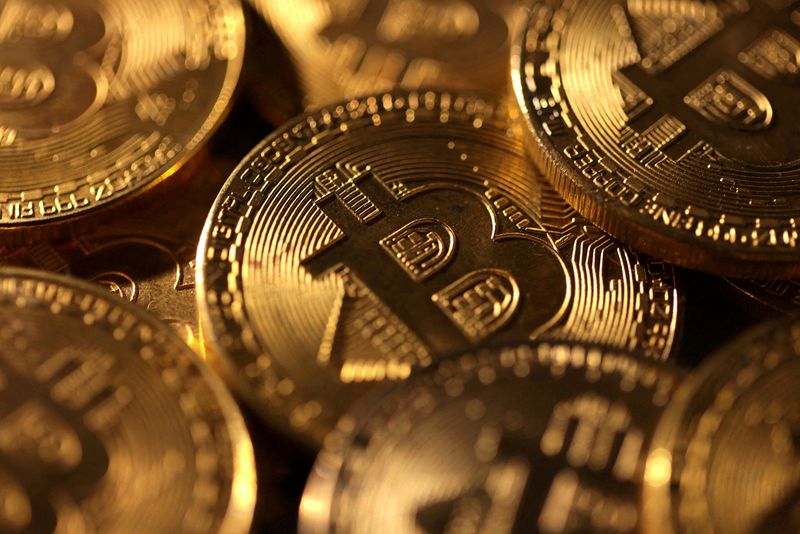
In a year marked by extreme volatility, Bitcoin (BTC-USD), the largest cryptocurrency by market capitalization, faces the prospect of concluding 2025 with its first annual decline since 2022. Following a series of record-setting highs and significant sell-offs, the cryptocurrency’s future appears uncertain as it trades around $89,000.
This tumultuous year has mirrored the performance of major stock indices, which have also experienced sharp peaks followed by steep declines driven by concerns over tariffs, interest rates, and rising valuations within the artificial intelligence sector. While equities have largely remained positive in 2025, Bitcoin’s correlation with traditional stock markets has intensified. Analysts suggest that this increased relationship is attributed to a growing influx of both retail and institutional investors into the crypto space, indicating that Bitcoin may soon become even more influenced by factors affecting stocks and other risk-oriented assets.
Jasper De Maere, a desk strategist at Wintermute, emphasized, “Crypto reacting to broader equities has been a consistent theme in 2025.” Following the election of pro-cryptocurrency U.S. President Donald Trump, Bitcoin initially surged, only to face a downturn following his tariff announcements in April. Nevertheless, a remarkable rebound ensued, culminating in an all-time high above $126,000 by early October.
However, subsequent tariff announcements on October 10 led to significant market turbulence, resulting in over $19 billion worth of liquidations in leveraged crypto positions—the largest in crypto history. Since that drastic drop, Bitcoin has struggled to regain momentum, with November marking its most significant monthly decline since mid-2021. Although options market sentiment has shown slight improvement recently, traders still assign a 15% chance of Bitcoin finishing the year below $80,000, down from 20% weeks prior. This presents a challenge for crypto proponents, particularly Michael Saylor’s company, Strategy, which had optimistically forecasted Bitcoin to reach $150,000 this year.
In a notable pivot, Strategy’s CEO, Phong Le, recently warned of a potential “Bitcoin winter.” Simultaneously, analysts at Standard Chartered adjusted their expectations, indicating that Bitcoin might fall beneath $100,000 but that it may not dip to these levels again in the future. Saylor asserted that his company could endure a 95% price decrease in Bitcoin without significant fallout.
The recent swoons in April and October have underscored the growing simultaneity between Bitcoin and equity markets, particularly regarding AI stocks, which share certain speculative characteristics and have garnered skepticism regarding overpriced valuations. Historically, the price of Bitcoin and stocks operated independently, but the increasing adoption of cryptocurrencies has contributed to a rising correlation. Data from LSEG shows that in 2025, the average correlation between Bitcoin and the S&P 500 has risen to 0.5 from 0.29 in 2024. The NASDAQ 100 index reflected similar trends, with an average correlation increase from 0.23 to 0.52 within the same timeframe.
Furthermore, both cryptocurrencies and equities appear to have grown more sensitive to interest rate adjustments. Recent research from Fidelity indicated that although Bitcoin’s price trajectory hasn’t historically reacted positively to Federal Reserve rate cuts, there are signs that the cryptocurrency often rallies in response to dovish signals. Analysts note that hawkish remarks from the Fed since October have contributed to Bitcoin’s recent struggles.
As analysts speculate about an 86% probability of a rate cut this week, they assert that this decision, alongside the fluctuating outlook for AI stocks, will significantly influence cryptocurrency prices in the near future. “The Fed’s support of monetary supply in this particular scenario is going to be an indicator that crypto is all looking at,” remarked Mo Shaikh, co-founder and general partner at Maximum Frequency Ventures.
As the cryptocurrency market navigates these multifaceted dynamics, investors and analysts alike remain alert to the evolving interplay between Bitcoin and broader financial markets.