







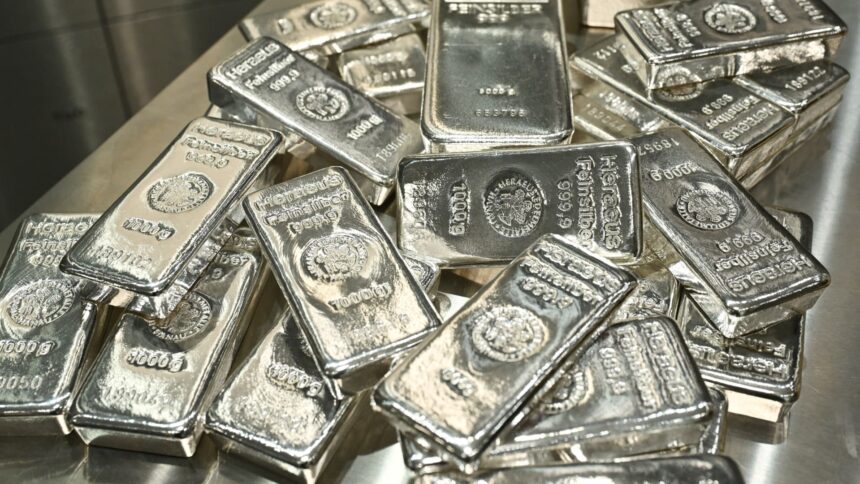
Silver has experienced an extraordinary surge in 2025, more than doubling its value and surpassing multiple historical records, including an impressive rise of 114.6% since the start of the year. As of recent trading, the metal was priced at approximately $61.96 per ounce, having peaked at $62.88 during a recent session. Notably, silver crossed the $60 threshold for the first time, marking a significant milestone for investors.
The momentum in silver’s price has been driven by a combination of supply constraints and rising demand, particularly as a safe haven asset amid increasing global uncertainty. Its dual role as an industrial metal further heightens its appeal. Key sectors utilizing silver include electronics, renewable energy, and technologies related to artificial intelligence, which have all seen heightened demand for the metal due to its superior electrical and thermal conductivity.
Experts suggest that silver’s price could continue climbing, with some forward-looking projections estimating prices could reach as high as $100 an ounce. Paul Williams, managing director at Solomon Global, expressed that silver offers a viable alternative for investors who may find gold increasingly unattainable. He emphasized that both retail and institutional buyers are turning to silver, drawn in by its unique positioning in the market.
The Silver Institute recently noted that industrial demand for silver is expected to grow as technology sectors expand. Vital industries, such as solar energy and electric vehicles, are anticipated to drive demand higher through the end of the decade, effectively supporting the long-term growth of silver prices.
Furthermore, Williams believes that the current trajectory of silver prices is sustainable, citing the ongoing supply and demand imbalance as a fundamental driver of the metal’s value. He has remained optimistic about silver’s future, predicting that any price pullbacks should be seen as temporary corrections rather than signs of a trend reversal.
Philippe Gijsels from BNP Paribas Fortis also shares a positive outlook on silver, citing its historical undervaluation and persistent deficits as compelling reasons for future price increases. He anticipates that conditions could lead to market volatility, especially as profit-taking occurs amidst rising prices. Gijsels and his co-author predict that the current bullish trend for silver could lead to developments reminiscent of past bull runs, suggesting the potential for significant pricing milestones ahead.
Despite its remarkable year, silver has notably outperformed gold, which has also experienced a record-breaking ascent of about 60% in price year-to-date. The dynamics between these two precious metals are highlighted by the decreasing gold-silver ratio, which measures the price relationship between the two. At present, the ratio hovers around 68, considerably lower than its peak earlier this year.
For those considering investing in silver, multiple avenues are available. Beyond the traditional route of purchasing physical silver coins or bars—which present storage and insurance challenges—investors can explore exchange-traded commodities (ETCs) that track silver performance with reduced costs. Additionally, investors may consider shares in silver mining companies, which can potentially amplify returns due to operational leverage, though they carry their own set of risks related to market dynamics.
Overall, the landscape for silver remains robust, characterized by a blend of strong industrial demand and investment interest. As the market continues to evolve, analysts remain watchful for fluctuations while maintaining an optimistic view on silver’s future trajectory.


