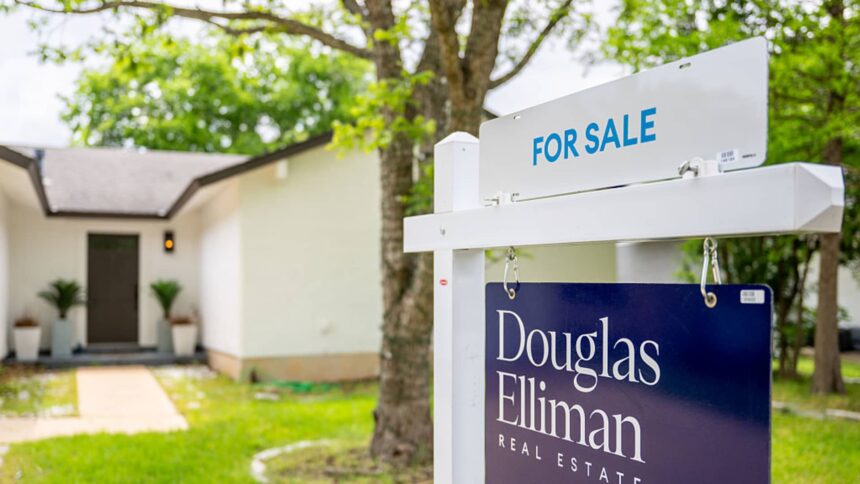
Mortgage rates have recently seen a decline, home prices are stabilizing, and the inventory of homes for sale is increasing, collectively enhancing affordability for prospective homebuyers. Despite these developments, the challenge of saving for a down payment remains a significant obstacle, particularly for first-time buyers.
Recent analysis from Parcl Labs reveals that home prices across the nation are largely flat compared to last year. After dipping into negative territory earlier this month, prices are currently up by just 0.3% year over year. The S&P CoreLogic Case-Shiller home price index for October highlighted notable variances among metropolitan areas. For instance, cities such as Chicago, New York, and Cleveland reported the largest price gains. In contrast, eight cities experienced price declines, with Tampa, Phoenix, and Dallas recording the most significant losses.
Nicholas Godec, head of fixed-income tradables and commodities at S&P Dow Jones Indices, pointed out that national home prices are not keeping pace with consumer inflation. The estimated Consumer Price Index (CPI) for October sits at approximately 3.1%, which is about 1.8 percentage points higher than the recent housing appreciation rate. This discrepancy indicates a slight decline in inflation-adjusted home values over the past year.
In terms of mortgage rates, the situation has improved as well. As of now, the average rate on a 30-year fixed mortgage is approximately 6.19%, a noticeable drop from over 7% at the beginning of the year. This reduction translates into substantial savings for homebuyers. For instance, a buyer putting down 20% on a $410,000 home—the national median—would see their monthly payment reduced by about $200 compared to the previous year.
The dynamics of weaker home prices coupled with lower mortgage rates are reshaping affordability calculations for first-time buyers. Realtor.com reports that the typical homebuyer now requires around seven years to save for a down payment, a decrease from 12 years at the height of the market in 2022. However, this period is still roughly double what it was before the pandemic, largely due to a decline in personal savings rates since 2020.
The proportion of homeownership has also experienced a decline, dropping to 65% in the latter half of this year—the lowest level since 2019. Yet, an increase in the supply of homes for sale is beginning to shift the market dynamics. Active listings have risen approximately 12% compared to last year, although they remain around 6% below pre-pandemic levels.
The market’s response from buyers has been encouraging. Pending home sales, which count contracts signed for existing homes, surged by 3.3% in November compared to October and were 2.6% higher than November 2024. This marks the highest level of pending sales in nearly three years, according to the National Association of Realtors.
Lawrence Yun, chief economist for the Realtors, noted that the improved affordability driven by lower mortgage rates, coupled with wage growth outpacing home price increases, is encouraging buyers to explore the market. The broader selection of inventory compared to last year is further enticing more potential buyers to participate.