As the year 2026 approaches, the issue of affordability looms large for many Americans, particularly concerning health insurance costs, which are expected to surge significantly in Florida. Chris Hand, a government law attorney, shared these insights during a recent discussion on “This Week in Jacksonville.”
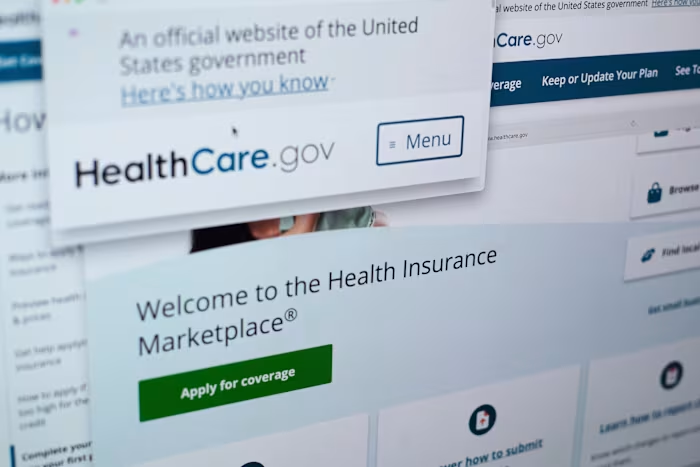
Hand pointed out that Florida uniquely relies on the Affordable Care Act (ACA) exchanges for health insurance. Currently, approximately 4.7 million Floridians obtain their coverage through these exchanges. However, there are looming concerns about the potential expiration of COVID-era subsidies, which could drastically affect health insurance accessibility.
If Congress fails to extend these subsidies by the end of the year, Hand warned that nearly one-third of those using the ACA in Florida—amounting to roughly 1.5 million individuals—might lose their health insurance. This looming policy shift poses significant risks for those dependent on these subsidies for affordable healthcare.
For those who manage to retain their coverage, the financial implications could still be severe. According to Hand, individuals maintaining their insurance could face staggering premium increases averaging around 132%, translating to over $500 more per month.
The Republican party has defended the decision not to extend these subsidies, labeling them as emergency measures linked specifically to the pandemic. However, the growing urgency of the situation has led to some bipartisan efforts. Recently, four members of the House Republican caucus joined Democrats in a discharge petition aimed at fast-tracking the issue to the House floor for discussion.
Hand emphasized that extending these subsidies would provide much-needed time for individuals and families to adjust to any shifts in the healthcare landscape as the expiration date looms.
Listeners can tune in to “This Week in Jacksonville” for further insights from Chris Hand on critical topics, including healthcare, inflation, artificial intelligence regulation, and Florida’s upcoming 2026 legislative session.