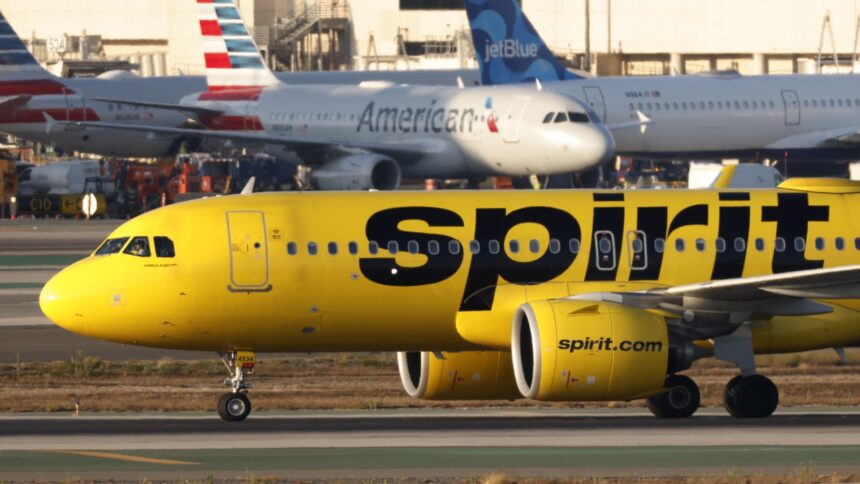
A Spirit Airlines Airbus A320 was seen taxiing at Los Angeles International Airport on September 1, 2024, after arriving from Boston, highlighting the airline’s ongoing operations amidst significant financial challenges. Reports have emerged that Spirit Airlines is engaged in discussions with Castlelake, an alternative investment firm, for a potential takeover as it navigates its way out of bankruptcy.
The airline filed for Chapter 11 bankruptcy protection in August of the previous year—marking its second such filing within a 12-month period—after an earlier turnaround plan failed to materialize. Frontier Airlines, another budget carrier, had explored a merger with Spirit over the years, including recent discussions, but was unable to finalize a deal. Insiders, speaking on the condition of anonymity, noted that while the two carriers had reached a merger agreement four years ago, it ultimately fell through following a surprise cash offer from JetBlue Airways.
The status of negotiations between Spirit and Castlelake remains unclear, with both parties silent on the matter. It is uncertain if Spirit’s bondholders will reach an agreement with Castlelake or what form any deal could take. Castlelake, based in Minneapolis, has a long history of involvement in aviation finance and recently announced the launch of a new aviation lending arm, Merit AirFinance, which comes with $1.8 billion in deployable capital.
In mid-December, Spirit announced an amendment to its agreement with creditors, securing an immediate infusion of $50 million in funding—a critical lifeline for the struggling carrier. The company specified that any further financial support would depend on progress made in either a standalone reorganization plan or a strategic transaction, indicating that Spirit is actively negotiating both avenues.
In its efforts to stabilize financially, Spirit Airlines has implemented several austerity measures, including reducing its flight schedules, downsizing its fleet, and cutting jobs. Last year, unions representing the airline’s pilots and flight attendants agreed to a total of $100 million in pay cuts, as noted in a letter from the Air Line Pilots Association urging bondholders to support the company’s restructuring and avoid a potential liquidation.
Historically, Spirit Airlines enjoyed profitable operations and solid margins within the competitive airline sector. However, the situation has changed dramatically since the onset of the pandemic, which saw a rise in wages and operational costs, as well as shifts in consumer preferences. The oversupply of domestic flights further exerted downward pressure on airfares, particularly affecting U.S.-focused carriers that lack the financial cushion provided by premium cabin offerings and loyalty programs.
The airline’s troubles intensified after a recall of Pratt & Whitney engines grounded a significant portion of its Airbus fleet in 2023. Additionally, a planned acquisition by JetBlue was thwarted two years ago when a federal judge deemed it anticompetitive, forcing both airlines to operate independently in a market increasingly dominated by larger competitors.
To restore its position in the marketplace, Spirit has sought to attract higher-spending customers by introducing more spacious seating options and bundled fare packages that include benefits such as seat assignments and baggage allowances. These efforts aim to enhance the airline’s competitiveness against larger rivals, which have benefited from affluent customers in the post-pandemic recovery.