In a recent interview, Coinbase CEO Brian Armstrong emphasized the role of Bitcoin as a competitor to the US dollar, suggesting that this competition incentivizes U.S. policymakers to exercise fiscal prudence. Armstrong articulated that Bitcoin acts as a safeguard against excessive deficit spending and inflation, saying, “if there’s too much deficit spending or inflation in the US, people will flee to Bitcoin in times of uncertainty.” He noted that if inflation rates exceed economic growth, it could jeopardize the dollar’s status as the world’s reserve currency, a scenario he described as potentially catastrophic for the United States.
Armstrong posited that Bitcoin indirectly pressures financial regulators and the Federal Reserve to avoid policies that could erode confidence in the US economy. He stated, “So I actually think in a strange way, Bitcoin is helping extend the American experiment,” asserting that Bitcoin’s presence is beneficial for the dollar by providing necessary checks against inflation and spending.
The context surrounding Armstrong’s assertions is stark, given the alarming growth of America’s national debt, which has surged to approximately $37.65 trillion. The US debt is reportedly increasing at a staggering rate, by $6 billion a day, translating to around $70,843 per second. This rapid accumulation of debt has led some financial institutions like JPMorgan to identify Bitcoin, along with gold, as a potential hedge against the risks posed by a weakening dollar.
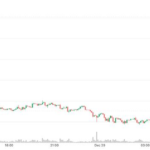
After peaking at $126,080 on October 10, Bitcoin has since experienced a 30% decline, landing at $88,210, while gold has reached a record high price of $4,545 per ounce. In response to the mounting national debt, the Trump administration signed an executive order in March to establish a Strategic Bitcoin Reserve, aiming to amass seized Bitcoin assets as a way to address fiscal challenges.
However, the reserve is currently limited to confiscated Bitcoin and has yet to include purchased assets. Legislative efforts, such as the Bitcoin Act of 2025, intended to bolster the Strategic Bitcoin Reserve, are still in their preliminary stages in Congress.
On a related note, some analysts suggest that stablecoins might play a more crucial role in maintaining the US dollar’s stature as the primary global reserve currency than Bitcoin. Sandeep Nailwal, CEO of the Polygon Foundation, pointed out that stablecoins have been instrumental in driving demand for US debt and facilitating the adoption of digital dollars worldwide, a trend he referred to as “Dollarisation 2.0.” The stablecoin market currently stands at around $312.6 billion, with projections by the US Treasury indicating it could swell to $2 trillion by 2028, underscoring the shifting dynamics in global finance.