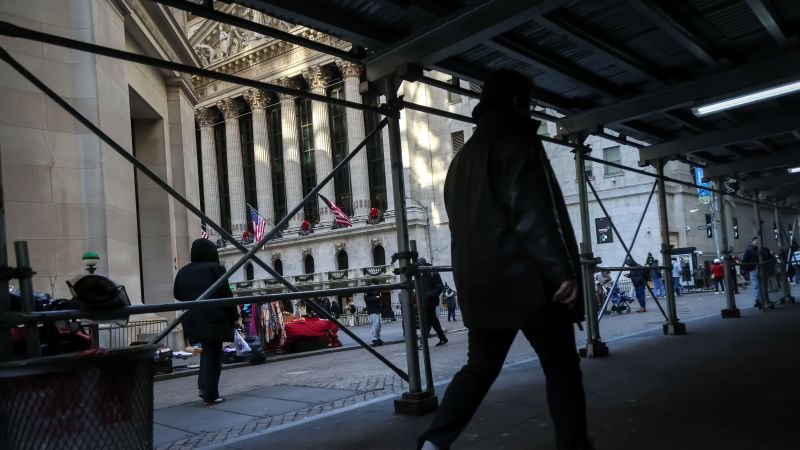
In the financial heart of New York, discussions surrounding the S&P 500’s performance have ignited a mix of optimism and caution as analysts speculate on the market’s trajectory for 2026. Following three consecutive years of impressive gains, Wall Street is largely bullish about the continuation of this trend, albeit with varied predictions regarding the extent of potential growth.
As of the close of 2025, the S&P 500 was recorded at 6,845.5 points. Forecasts from various analysts reflect a spectrum of expectations. For instance, Bank of America projects a modest increase, envisioning the index reach 7,100 by the end of 2026, translating to an approximate gain of 3.72%. In contrast, Deutsche Bank is significantly more optimistic, predicting an ascendance to 8,000 points, suggesting a 16.87% increase.
Statistical trends also bolster the optimism; historical data shows that years when the S&P 500 has enjoyed a rise of at least 15% typically lead to a subsequent year average return of around 8%. However, Adam Turnquist from LPL Financial advises caution, noting that previous instances have often seen the index decline by an average of 14% at some point before rebounding. This highlights the unpredictability that often accompanies stock market dynamics.
The past year has not been without its challenges. The S&P 500 experienced significant volatility, notably a sharp decline of 19% in April following the announcement of aggressive tariffs by former President Trump. Despite this, the index managed to bounce back, ultimately achieving a year marked by 39 new record highs and an overall gain exceeding 16%. Fueling this surge were several factors, including excitement surrounding technology and AI advancements, a temporary easing of trade tensions, and robust earnings reports from corporations.
Analysts remain hopeful for 2026, buoyed by expectations for continued Federal Reserve rate cuts, which are anticipated to foster an encouraging environment for stock growth. Economic strategist Hardika Singh from Fundstrat emphasized the lack of substantial reasons to doubt the ongoing bull market, asserting that the momentum shows no signs of slowing.
Nevertheless, some analysts express concern over certain possible obstacles. Uncertainties surrounding future leadership at the Federal Reserve, along with ongoing geopolitical frictions and tariffs, could pose challenges in the wake of these recent gains. Valuation concerns have also come to the forefront, with analysts noting that U.S. stocks are approaching higher price-to-earnings ratios, which historically have been associated with reduced future returns unless accompanied by ongoing robust earnings growth.
Despite these concerns, many see the rise of AI as a catalyst for growth. Analysts from JPMorgan Chase argue that the U.S. is on the brink of a transformative phase, driven by an AI-led supercycle that could lead to substantial corporate profits and capital expenditure increases.
Tech-focused investments appear to be a focal point for many strategic picks for the upcoming year. Analysts like Dan Ives from Wedbush Securities have identified leading tech stocks such as Nvidia, Microsoft, Apple, Tesla, and Palantir as key players poised for potential growth.
Market sentiment has shifted, with the Dow Jones Industrial Average beginning to outpace the technology-heavy Nasdaq in November, signaling a broader rally across various sectors as more traditionally overlooked companies join in on the gains.
Strategic forecasts vary, with Ed Yardeni of Yardeni Research projecting a rise to 7,700 for the S&P 500 by the end of 2026, while CIBC’s Christopher Harvey suggests an increase of around 8.8%. Both analysts acknowledge the precarious nature of the current market, pointing out concerns about the credit market and potential impacts stemming from political pressures on the Federal Reserve’s decisions.
Ultimately, the backdrop of the economy remains complex, with notable disparities in consumer spending patterns. While affluent households continue to drive economic activity, individuals reliant on regular wages often find themselves struggling, presenting a dual-edged challenge for sustaining corporate profits.
As Wall Street braces for another year filled with potential and risk, investor sentiment remains a mixed bag of hope and vigilance as they navigate the fragile landscape ahead.