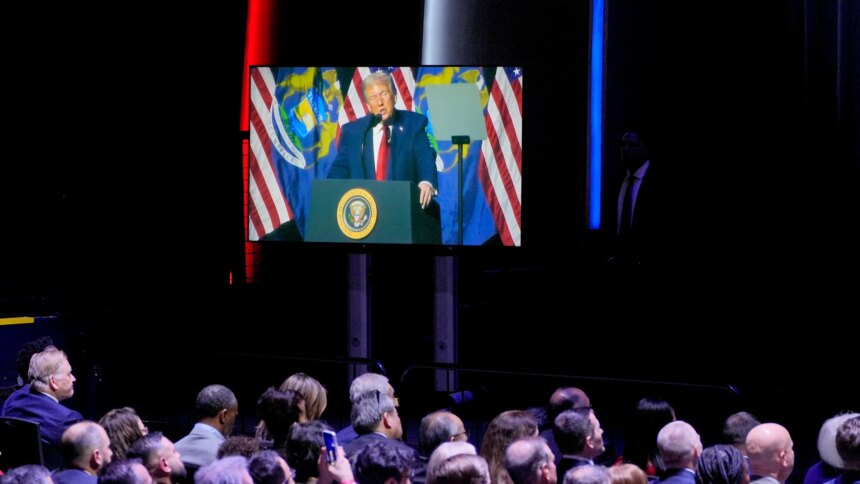
In a recent address to the Detroit Economic Club, President Donald Trump proposed a one-year cap on credit card interest rates at 10%, a move that has stirred significant controversy within the banking sector. While Trump framed his proposal as a means to aid consumers burdened by high-interest debt, financial experts caution that such a cap could impede access to affordable credit for many.
According to a survey conducted by Bankrate.com, 47% of credit cardholders currently maintain a balance on their cards, with approximately 20% believing they may never fully pay off their debt. The average credit card interest rate stands at a daunting 19.65%, a slight drop from last year but an increase from the rate seen in 2020. Trump’s assertion that “the rates are way too high” resonates with many consumers struggling with escalating debt costs.
During his speech, Trump described “affordability” as a misleading term often used by Democrats, and pledged to unveil additional strategies aimed at reducing consumer costs, including the proposed interest rate cap. He emphasized dissatisfaction with existing credit card rates, which can reach as high as 30%, and expressed commitment to protecting the American public from what he termed exploitative practices by credit card companies.
Banking associations have pushed back vigorously against Trump’s proposal, suggesting it could lead to adverse effects for consumers. They argue that a 10% cap may restrict credit availability to riskier borrowers, thereby pushing some individuals toward less regulated and potentially more costly credit options. A joint statement issued by several banking institutions warned that reducing rates could lead to millions losing access to credit cards altogether.
Ted Rossman, a senior industry analyst with Bankrate.com, illustrated the potential impact of reduced rates. For instance, a $1,000 charge at a 20% interest rate could result in nearly $370 in interest over 40 months, compared to just $147 at a 10% rate. However, the current proposal would only maintain the 10% cap for one year, leading to uncertainty about future rates once the cap expires.
Critics, including finance professor Adam Levitin, argue that while the cap appears to offer temporary relief, it could destabilize lending processes. Levitin pointed out that lenders would struggle to remain profitable under such a low rate and may cease extending credit altogether. Additionally, he cautioned that a spike in borrowing during the cap period could lead to deeper financial troubles for consumers.
As the debate heats up, banking entities recall previous government initiatives aimed at capping fees and interest rates. The Trump administration previously sided with banks on issues related to fee regulations, complicating the current dialogue around credit card interest rates.
While Trump’s proposal aims to address the pressing concern of affordability in a volatile economy, both consumers and financial analysts remain wary about the long-term implications of enacting such a measure. As discussions continue, some industry experts advocate for more comprehensive solutions that focus on sustainable lending practices rather than temporary fixes that may end up creating additional barriers for vulnerable borrowers.