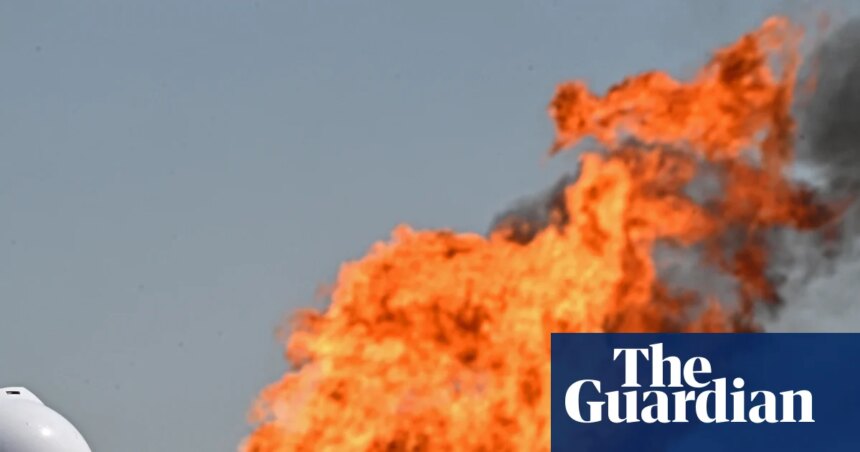
The price of Brent oil surged above $126 per barrel on Wednesday, reaching its highest level since 2022, primarily fueled by concerns over the prolonged U.S. blockade of Iranian ports and stagnant peace negotiations. The spike, more than 13% within a single day, marks the highest price since the outbreak of the war in Ukraine on February 28, with the last peak of $139 being recorded during Russia’s invasion in 2022.
Market anxiety escalated as former President Donald Trump hinted at an extended blockade of Iranian ports by the U.S. Navy, prompting Iran to effectively close the Strait of Hormuz to oil tankers. U.S.-Iran discussions scheduled for this past weekend in Islamabad did not take place, contributing to the ongoing deadlock.
During discussions with oil executives, Trump emphasized the potential for the blockade to persist for months. “Iran better get smart soon,” he cautioned, echoing concerns about the strategic implications of the blockade. U.S. officials aim to leverage this closure to pressure Iran into capping its oil production, especially as facilities like Kharg Island near capacity.
“The blockade is somewhat more effective than the bombing,” Trump remarked, adding that Iran is suffering significantly under the current circumstances. With the conflict nearing its 10th week, predictions of a quick resolution have proven overly optimistic; initial forecasts suggested the conflict would last only four to six weeks.
The ongoing blockade is causing a daily drop of nearly 20 million barrels in global oil supplies as the Strait of Hormuz remains largely obstructed. Analysts from Oxford Economics have warned that a sustained blockade could push oil prices to as high as $190 per barrel by August.
Economist Paul Krug recently observed that analysts may be underestimating the impact of a protracted crisis at the Strait of Hormuz. He warned that if the strait remains closed for an additional three months, the likelihood of a global recession becomes significantly higher.
Historical parallels were drawn to the 2008 financial crisis, during which oil prices surged to near $147 per barrel. Tehran has previously indicated that the world should brace for oil prices reaching $200 in the event of escalated military tensions.
The implications of this supply shock are far-reaching, contributing to rising inflation around the globe. In the U.S., inflation surged by 3.3% in March year-on-year, while Britain is facing an estimated £35 billion economic setback, with potential risks of a recession emerging as early as 2026.
As U.S. lawmakers interrogated Defense Secretary Pete Hegseth regarding the financial burdens and strategic direction of the ongoing conflict, Iran’s Foreign Minister Abbas Araghchi was actively communicating with officials in countries like India, Kenya, and Poland, seeking to build international support amid the tensions with the U.S.