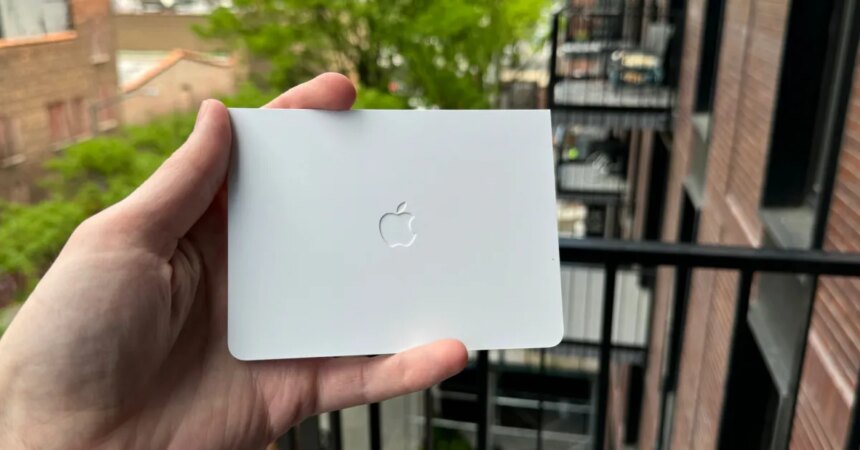
Last week, Apple made headlines with its announcement that JPMorgan Chase will take over the Apple Card, a significant shift as the tech giant ends its partnership with Goldman Sachs. This move follows an in-depth analysis from The Wall Street Journal, which described the relationship between Apple and Goldman Sachs as an “unhappy marriage.”
The report reveals that Apple’s expectations for the Apple Card program were misaligned with Goldman Sachs’ practices. Apple pressured Goldman to approve nearly all applicants for the card, which resulted in the bank approving a notable percentage of subprime borrowers. Over 30% of Apple Card balances are attributed to individuals with credit scores below what many lenders consider prime, a statistic that surpasses the rates seen by many financial institutions specializing in subprime lending.
The relationship soured to the point where Apple formally proposed to end its partnership with Goldman Sachs. Following this proposal, Apple sought to engage with other issuers. In discussions, Apple likened its partnership with Goldman to an unhappy marriage, indicating that while both companies remained in the relationship, neither truly wanted to continue together.
During the process of finding a new partner, multiple options were explored. One of the potential solutions was to employ a private-credit fund to handle account balances—an approach that has gained traction for bespoke financing deals across Wall Street. Apple even sought help from a boutique investment bank to locate a suitable fund and consulted with a small fintech company regarding a partnership.
Goldman Sachs also reached out to private-credit firms to gauge interest and explored its collaboration with Barclays, which was contemplating its own bid. Goldman expected that Apple would finalize its decision on a new partner by early March 2025, but this timeline did not materialize. Reports indicated that Goldman executives grew concerned as it seemed Apple was not taking the necessary steps to finalize the transition.
Amid the negotiations, it was revealed that Apple was simultaneously engaging with multiple banks, including Chase, American Express, and Synchrony. At one point, Synchrony believed it was on the verge of securing the deal and began strategizing to ensure a smooth transition.
In May 2025, Apple announced that Chase would become its “preferred partner.” However, before this announcement, Apple had also engaged with Capital One, informing them that a deal was imminent but providing them with a final opportunity for negotiation. Although Capital One expressed focus on another acquisition, the company still held meetings with Apple and Goldman Sachs as late as June.
Ultimately, Apple opted for JPMorgan Chase, who negotiated various protective measures to safeguard against potential spikes in card delinquencies or other performance issues after the contract signing. Additionally, Chase secured the right to withdraw from the deal prior to its closing.
The transition away from Goldman Sachs is expected to unfold over the next two years, with Apple indicating it will share further details as the agreement progresses.