Stocks showed signs of a positive opening on Thursday, January 15, with semiconductor companies leading the way amid indications of robust demand. In contrast, financial stocks displayed a mixed performance as a fresh wave of earnings reports emerged. The S&P 500 and Nasdaq had closed lower the previous day, enduring pressure from both technology and financial sectors for a second consecutive session. In political news, President Donald Trump confirmed he would not fire Federal Reserve Chair Jerome Powell and dismissed the idea of military action against Iran.
Goldman Sachs delivered an impressive fourth-quarter performance, surpassing revenue estimates by nearly $900 million, driven by strong earnings in equities trading and asset and wealth management. Even after excluding a preannounced gain of 46 cents per share from selling its Apple Card business, earnings per share exceeded expectations, thanks in part to a 25% rise in investment banking fees that reached $2.58 billion. Despite this strong showing, shares of Goldman Sachs slipped 1.5%, leading to some profit-taking among investors.
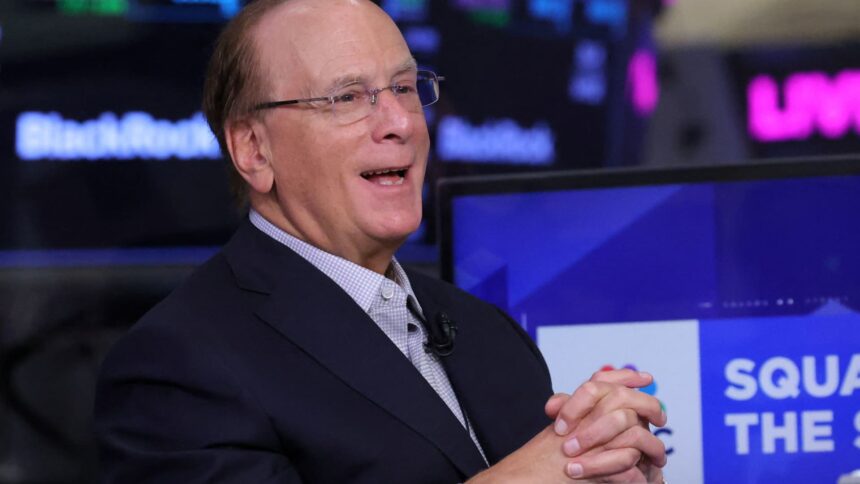
Conversely, BlackRock’s quarterly earnings were closely watched, especially after recent profit-taking in that stock. The world’s largest asset manager reported impressive results across the board, with a 22% surge in assets under management, totaling $14 trillion in the fourth quarter. As a result, shares of BlackRock surged by 2%.
Morgan Stanley also reported a solid performance, with earnings per share and revenue both beating estimates. The company saw particularly strong sales in wealth management, achieving a record net revenue of $31.8 billion for all of 2025. Investment banking proved to be another highlight for Morgan Stanley, showing a 47% increase in net revenue to $2.41 billion in Q4, although its stock dipped modestly.
Wells Fargo, Bank of America, and Citigroup released earnings results the previous day, following JPMorgan’s earnings announcement on Tuesday. Despite the banks entering their earnings season on strong footing, market pressure has disappointed some expectations. Wells Fargo, in particular, faced price target reductions.
In the semiconductor sector, Taiwan Semiconductor Manufacturing Company announced a rise in its capital budget to satisfy demand, primarily driven by hyperscalers and high-end smartphones. This move bodes well for companies such as Apple and Nvidia, which are also among notable portfolio holdings.
In a related development, President Trump enacted a proclamation imposing a 25% tariff on select semiconductors, explicitly excluding chips essential for augmenting America’s technology supply chain. This decision opens the door for broader tariffs pending the completion of trade negotiations.
The semiconductor sector continues to gain attention, with Wells Fargo upgrading its rating on Broadcom from hold to buy and adjusting its price target from $410 to $430. Analysts argue that concerns related to gross margins are exaggerated, and they foresee promising growth driven by Google’s TPUs and increased demand for custom chips at Broadcom.
In the aerospace industry, Bernstein raised Boeing’s price target from $277 to $298, maintaining a buy rating. The analysts consider Boeing their top pick in the aerospace and defense sector for 2026, expressing increasing confidence in the company’s growth trajectory.
On the employment front, first-time filings for unemployment benefits totaled 198,000 last week, marking a decrease of 9,000 from the previous week and falling below Dow Jones’ estimate of 215,000. Additionally, the four-week moving average for jobless claims dipped to 205,000, the lowest figure recorded in nearly two years.
Subscribers to the CNBC Investing Club are reminded that they will receive trade alerts from Jim Cramer prior to any stock transactions in the club’s portfolio, with specific waiting periods applied based on whether the stock has been discussed on CNBC.