The United Arab Emirates (UAE) has announced its decision to leave the Organization of the Petroleum Exporting Countries (OPEC), a significant move that underscores long-standing tensions between the UAE and the cartel’s dominant member, Saudi Arabia. The departure, effective May 1, also includes exiting the wider OPEC+ alliance, which encompasses other oil-producing nations like Russia.
For years, the UAE has struggled against the limitations imposed by OPEC’s quota system, which restricts member nations to specified production levels. The UAE has heavily invested in expanding its oil industry, aiming for an increased market share, but has frequently found itself constrained by these imposed production limits. Energy Minister Suhail Al Mazrouei expressed a critical viewpoint, stating, “The world needs more energy. The world needs more resources, and [the] UAE wanted to be unconstrained by any groups.”
Analysts interpret this departure as a strategic move by a country eager to operate independently. The UAE’s production capacity stands at approximately 4.8 million barrels per day (bpd), although current output under OPEC guidelines is between 3.2 and 3.6 million bpd. Plans are already underway to escalate production levels to nearly 5 million bpd by next year. Jorge Leon, a geopolitical analyst at Rystad Energy, highlighted the impact of the UAE’s exit on OPEC, noting, “Losing a member with 4.8 million barrels per day of capacity takes a real tool out of the group’s hands.”
The absence of the UAE will complicate Saudi Arabia’s task of managing oil prices, traditionally achieved through production cuts and quota discipline shared among OPEC members. David Oxley from Capital Economics underscored the significance of this exit, describing it as “the thin end of the wedge,” indicating a potential unraveling of solidarity within the group. The UAE’s departure further exposes existing fractures regarding decision-making, particularly the perception that Saudi Arabia holds disproportionate influence.
As Saudi Arabia bases its fiscal strategies on oil prices around $90 per barrel to underwrite extensive projects like the Vision 2030 initiative—aimed at diversifying the economy away from fossil fuels—the exit of a significant oil producer poses economic risks. Each barrel withheld from the market translates to lost revenue, which could stymie economic growth.
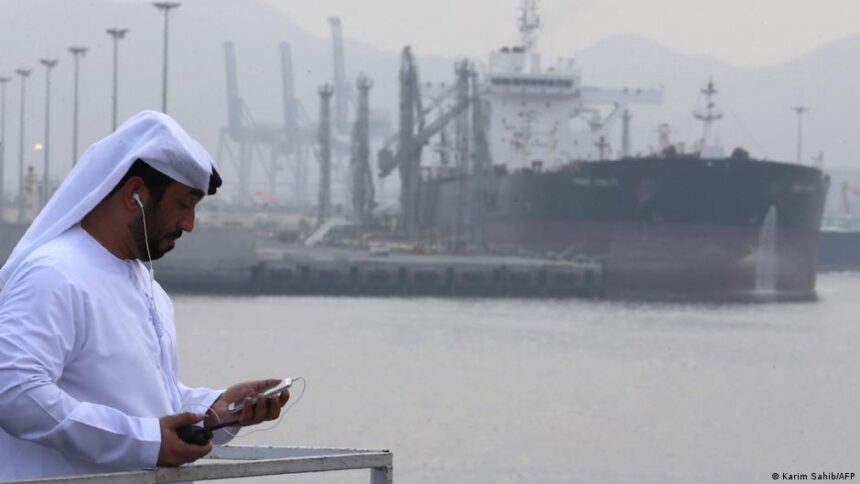
The ramifications of the UAE’s exit on global oil prices may not be immediate, largely due to the prevailing disruption in the Strait of Hormuz. Current conditions mean that significant segments of oil exports from the region remain obstructed, with the UAE redirecting a substantial share of its output to Fujairah port via a crowded pipeline. Thus, while any new production could take time to materialize, analysts predict that the situation in the Strait will continue to dominate global oil markets in the short term.
Looking ahead, the UAE’s exit raises questions about the potential for other producers to reevaluate their participation in OPEC. Jeff Colgan, an OPEC expert, cautioned that the departure could fuel skepticism regarding the group’s cohesion and stability. While a mass departure of other member states seems unlikely due to differing levels of production capabilities and economic conditions, any successful outcomes for the UAE outside the OPEC framework could entice others to consider similar actions.
The dynamics within OPEC appear increasingly fragile, with the UAE’s decision signaling deeper fractures and discontent regarding the established quota system. As the cartel’s influence wanes—once controlling over half of the global supply, now commanding less than a third—the future of OPEC leadership and cohesion hangs in the balance.