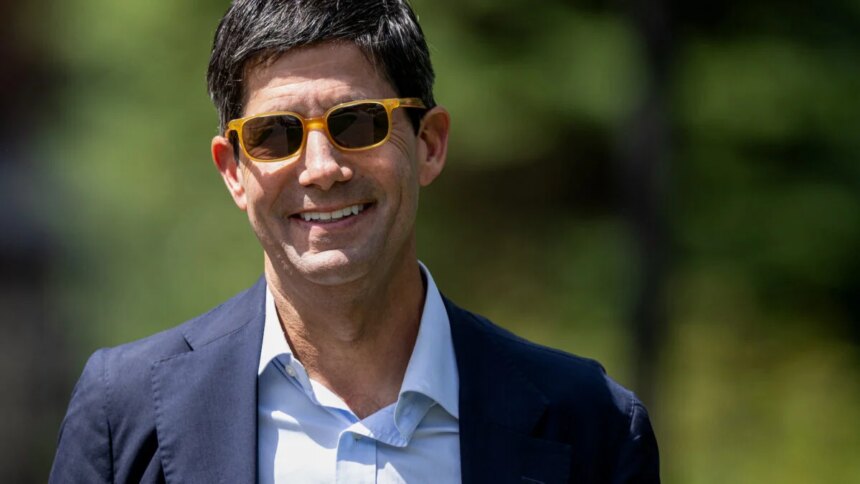
The recent announcement regarding Kevin Warsh as President Trump’s nominee to succeed Jerome Powell as Federal Reserve Chairman has stirred significant interest, particularly within the cryptocurrency sector. Warsh, who served as a member of the Federal Reserve Board of Governors during both the Bush and Obama administrations, is well-known for his complex views on cryptocurrencies, including Bitcoin, central bank digital currencies (CBDCs), and stablecoins.
Historically, Warsh has expressed support for CBDCs, suggesting they may have advantages over stablecoins. However, he was also an investor in Basis, a startup focusing on a form of algorithmic stablecoin that drew parallels to one of the cryptocurrencies that failed during the 2022 collapse. Moreover, he played a role in the inception of Bitwise Asset Management, a firm that now maintains publicly traded exchange-traded funds (ETFs) for Bitcoin and various crypto assets.
Warsh’s comments on Bitcoin have ranged from neutral to positive. In a past interview with CNBC, he characterized Bitcoin as “gold for anyone under the age of 40.” Furthermore, during a recent discussion on the program Uncommon Knowledge, he asserted that Bitcoin serves as an important asset that aids policymakers by providing insights into effective economic strategies. He cautioned against viewing Bitcoin as a direct alternative to the dollar, suggesting instead that it could function as a “good policeman for policy.”
This alignment of Warsh’s views with the Trump administration’s stance on cryptocurrency—particularly the potential for stablecoins to bolster U.S. monetary dominance and the idea of establishing a national Bitcoin reserve—suggests a potential shift in U.S. economic policy. His assertion that Bitcoin could help check the actions of policymakers echoes research by experts like Jal Toorey, who posits that Bitcoin may represent an ideal monetary framework as outlined by mathematician John Nash.
However, despite this seemingly optimistic perspective toward Bitcoin, the cryptocurrency’s value initially fell following the announcement of Warsh’s nomination. Analysts indicated that the drop in price might be linked to Warsh’s historical advocacy for a more hawkish Fed policy, contrasting with Trump’s prior criticisms of Powell for failing to reduce interest rates.
While Bitcoin is often compared to gold as a safe haven asset, recent behaviors indicate it has been more correlated with risk-on sentiment during economic instability. This volatility mirrors changes in gold prices, which have also been influenced by global tensions.
Despite ongoing interest in the integration of cryptocurrencies by central banks, there remains a significant level of uncertainty concerning Warsh’s specific policy preferences. Recent comments from the Governor of the Bank of France highlighted a lack of understanding surrounding Bitcoin’s decentralized nature. Nonetheless, the Czech National Bank’s acquisition of Bitcoin as part of a piloting initiative exemplifies a growing albeit cautious central bank interest in the cryptocurrency space.
The potential interplay between Bitcoin and the U.S. dollar raises pertinent questions, especially as U.S. debt levels become increasingly scrutinized amidst shifting global monetary dynamics. Observers note that foreign central banks have begun to hold more gold than U.S. treasuries, a notable shift not seen since 1996. These developments have led to speculation about U.S. strategies aimed at maintaining economic supremacy in an evolving digital landscape.
Additionally, the financial success of the Trump family within the cryptocurrency market—reportedly benefiting from $1.4 billion in crypto profits last year amid concerns over conflicts of interest—could pose political challenges, particularly as Senate Democrats have highlighted the need to address these issues through legislation like the CLARITY Act.
With all these factors at play, the nomination of Kevin Warsh presents a pivotal moment in the cryptocurrency discourse, inviting ongoing debate about the future interaction between digital assets and traditional economic frameworks in the United States.