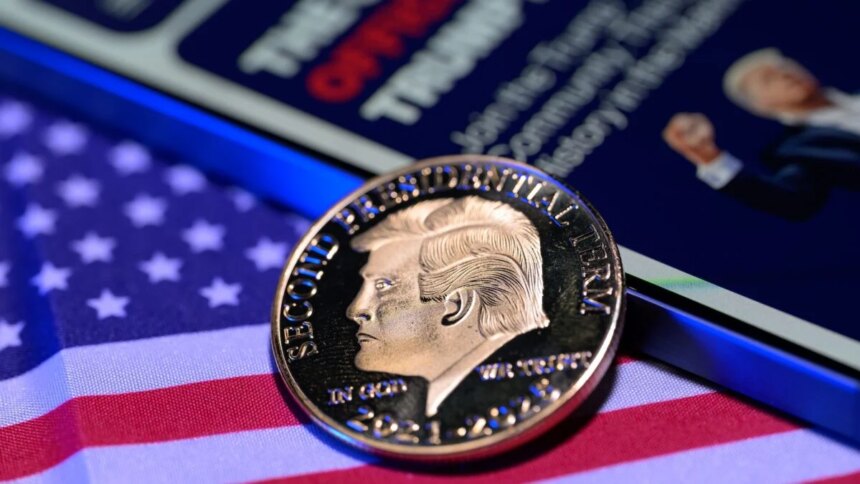
Recent turbulence in the cryptocurrency market has been marked by significant price fluctuations, particularly with Bitcoin, which has rebounded to approximately $70,000 after plummeting to around $60,000. This volatility has prompted political commentary, with Democrats openly mocking former President Trump’s foray into the crypto world, highlighting the steep decline of the TRUMP memecoin and the even worse performance of the MELANIA memecoin, which are down 95% and 99% from their all-time highs, respectively.
Accusations of corruption have surfaced regarding the Trump administration’s regulatory practices in the crypto space. Critics allege that favorable policies have been offered to crypto insiders in exchange for benefits, with Justin Sun’s substantial holdings in the TRUMP memecoin drawing attention from House Democrats. A letter was sent to the SEC raising concerns about inadequate regulatory oversight during Trump’s second term, particularly in light of claims linking the memecoin to influence over policy decisions.
Further complicating matters, the administration’s handling of critical pardons has raised eyebrows. While a pardon was granted to the former CEO of Binance, similar relief was notably absent for Bitcoin developers with no ties to Trump. Additional scrutiny has been directed at a recent $500 million investment from the United Arab Emirates National Security Adviser, Sheikh Tahnoon bin Zayed Al Nahyan, into Trump-associated crypto venture World Liberty Financial, stirring fears of national security implications and potential foreign influence.
In response to these controversies, U.S. House Representative Ro Khanna addressed his concerns in a letter to both World Liberty Financial co-founder Zack Witkoff and U.S. Attorney Benjamin Wallace. Khanna’s correspondence emphasized the potential ramifications of the Emirati investment on U.S. export policy and alleged connections to Chinese interests, with the situation described as both shocking and scandalous.
The fallout has also impacted Trump’s promise for clearer regulatory frameworks for cryptocurrencies through the proposed CLARITY Act. Coinbase CEO Brian Armstrong recently withdrew support for the bill after reviewing a draft version, stating that the proposed legislation could be worse than having no regulatory bill at all. This further signals a growing discontent among industry leaders regarding ethical standards and the need for improved regulations to curb perceived corruption.
Senator Elizabeth Warren has also voiced her disapproval, framing the UAE investment as a troubling instance of bribery that jeopardizes national security. The push for stricter ethics protections within the CLARITY Act reflects an ongoing struggle, especially as a crypto-aligned super PAC pools substantial resources for upcoming midterm elections.
The absence of clear regulations, particularly regarding protections for developers, has raised alarms among proponents of decentralized cryptocurrencies. The Bitcoin Policy Institute’s Head of Policy, Zack Shapiro, issued a statement advocating for developers’ rights to operate without the constraints of regulatory oversight typically imposed on financial intermediaries. Advocates argue that developers should maintain the autonomy to manage and transact with their assets, free from reliance on centralized systems.
Overall, the cryptocurrency landscape remains fraught with uncertainty amid each wave of volatility, regulatory concerns, and political scrutiny, painting a complex picture for moving forward in the ever-evolving digital currency realm.