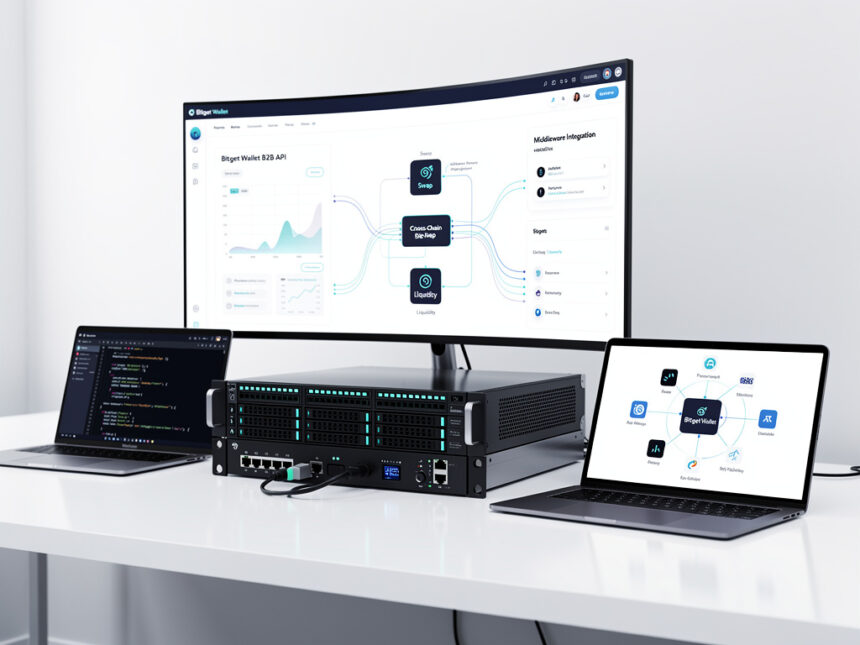
In a significant shift towards business-to-business offerings, Bitget Wallet has announced plans to launch a comprehensive trading infrastructure API, signaling a strategic transformation from a consumer-focused cryptocurrency application to a vital infrastructure provider for various fintech applications and decentralized projects. This initiative aims to position Bitget Wallet not merely as a wallet provider but as a foundational layer for building robust crypto trading capabilities across platforms.
According to reports by BeInCrypto, the company is opening its core swap and trading engine to third-party developers and businesses through a suite of APIs. This represents a departure from Bitget’s previous emphasis on consumer products. Leadership within the company seems to recognize a ceiling on growth from consumer acquisition alone, aiming instead to provide the essential infrastructure that supports transactions across a diverse array of platforms.
Historically, Bitget Wallet has focused on creating a user-friendly consumer product, designed to make cryptocurrency accessible and secure for everyday use. It offers multi-chain functionality, integrated swaps, and a variety of DeFi tools that have garnered a substantial user base. However, the recent pivot suggests a strategic view that positions the company alongside well-known fintech players like Stripe or Plaid, which provide seamless financial infrastructure rather than targeting end users directly.
The suite of APIs includes access to a swap engine that aggregates liquidity from multiple decentralized exchanges and pools across various blockchain networks. This provision allows partner platforms to offer competitive token swap rates without the complexity of establishing their own liquidity relationships or developing routing algorithms. Additionally, the API features cross-chain bridge functionality, facilitating asset transfers across different blockchain networks, which is increasingly relevant as the crypto ecosystem diversifies.
Bitget Wallet is entering a competitive arena, where established players like 0x (now Matcha), 1inch, and Paraswap have already claimed significant ground in the Web3 infrastructure space by offering decentralized exchange aggregation at the API level. Moreover, wallet infrastructure providers such as Web3Auth and Magic focus on authentication and key management. Bitget differentiates itself by providing a more comprehensive offering that combines wallet infrastructure, swap execution, cross-chain bridging, and liquidity aggregation.
The timing of this strategic expansion is notable, coinciding with a surge of institutional interest in the crypto industry spurred by developments like the approval of spot Bitcoin ETFs in the U.S. Traditional financial institutions and fintech startups are exploring ways to incorporate crypto capabilities into their existing products without the need for building complex infrastructure from scratch. Bitget Wallet aims to fill that gap with its turnkey solutions.
From a business model standpoint, this B2B infrastructure approach may provide advantages over the consumer wallet sector. While consumer wallets typically struggle with high competitive pressures and thin profit margins, B2B relationships are often stickier, creating recurring revenue streams that are more predictable. Once a platform integrates a trading API, the switching costs become significant, making it more challenging for partners to migrate away.
A critical aspect of becoming a successful B2B infrastructure provider lies in ensuring robust security and compliance. Enterprises and regulated financial institutions require stringent security measures and any lapses could have far-reaching consequences. Bitget Wallet will need to prove that its API offerings meet or exceed industry security standards through comprehensive audits and key management practices. Compliance with evolving regulatory frameworks will also be vital, as B2B partners increasingly demand infrastructure support for transaction monitoring, sanctions, and reporting.
As the crypto industry matures, Bitget Wallet’s focus on B2B infrastructure is indicative of a broader shift towards modular architectures in technology. The era of every entity building solutions in-house is transitioning to a system where specialized providers manage specific technological layers. This new architecture is essential for fostering widespread adoption of crypto technologies, as it allows for the creation of specialized services that lower barriers to entry for fintech startups and traditional financial institutions alike.
Looking ahead, the success of Bitget Wallet’s B2B strategy will hinge on its ability to execute effectively. The company must ensure its APIs are reliable and secure, facilitate a strong developer relations program, and navigate a complex regulatory landscape without posing compliance risks to its partners. If successful, this infrastructure approach could redefine Bitget Wallet’s identity and offer growth far beyond its original consumer wallet business, much like how Amazon Web Services transformed Amazon into a technology infrastructure leader. The landscape of crypto infrastructure is evolving, and it will be crucial to see which firms position themselves as the essential platforms for the next generation of digital finance.