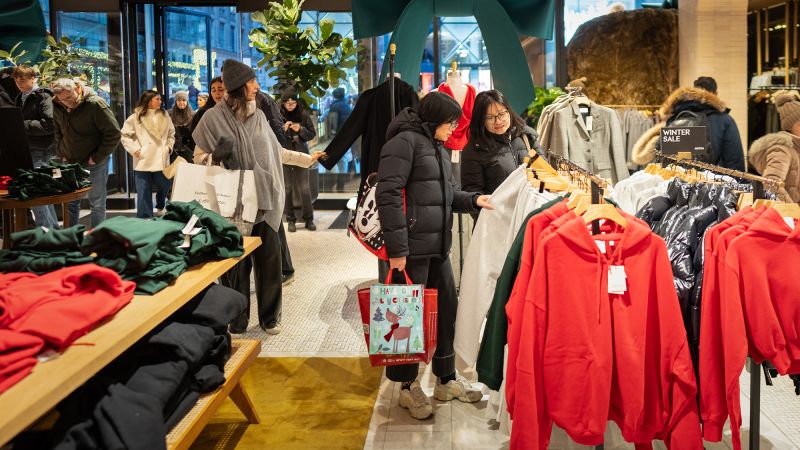
US consumers maintained their spending levels in December, a month critical for retail sales, amid growing concerns about the economy and a stagnating labor market. The Commerce Department reported that retail sales remained unchanged from the previous month, a significant drop from November’s 0.6% increase and falling short of economists’ expectations of a 0.4% gain, according to data firm FactSet. It’s noteworthy that the December report was delayed by a month due to last year’s government shutdown.
Retail sales showed declines across a majority of categories monitored by the Commerce Department, with furniture stores and miscellaneous stores both experiencing a 0.9% decrease. Conversely, spending saw a modest increase in specific sectors, with home improvement stores recording a rise of 1.2%.
An alternative measure of retail sales, often referred to as the control group—which excludes volatile categories and provides a clearer picture of underlying consumer demand—declined by 0.1% in December. This figure significantly underperformed the anticipated 0.4% increase.
Despite a marked slowdown in hiring across the country, declining consumer confidence, and persistently high inflation, spending had not seen drastic cuts from consumers up until now. However, the stagnation seen in December raises concerns that Americans may be nearing their financial limits in terms of discretionary spending.
This situation is being closely monitored as further developments unfold.