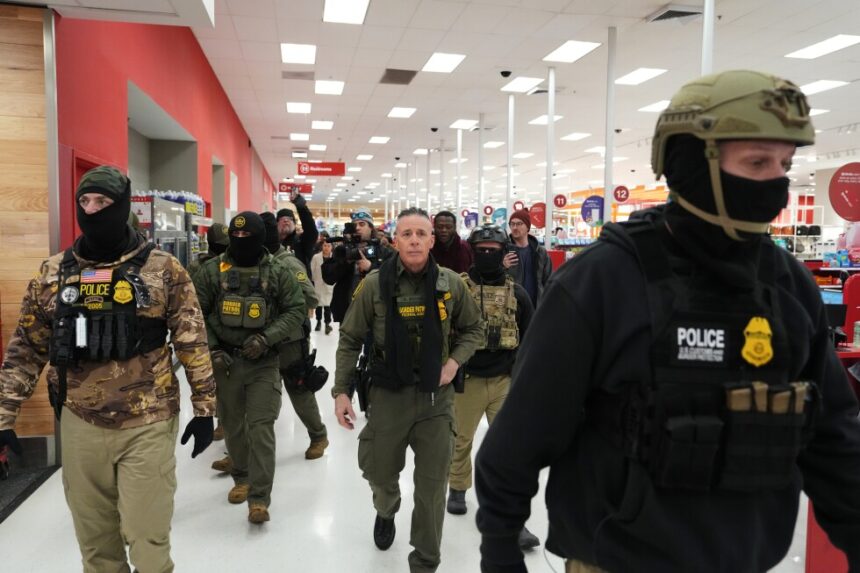
Activists organized protests at over two dozen Target stores across the United States to urge the retailer to take a public stance against an ongoing immigration enforcement crackdown in its home state of Minnesota. This initiative, led by ICE Out Minnesota—a coalition of community groups, religious leaders, and labor unions—aimed for sit-ins and demonstrations to persist for an entire week. Minneapolis, Target’s headquarters, became a focal point after federal agents fatally shot two residents involved in anti-ICE protests, intensifying community scrutiny of the retailer.
Elan Axelbank, part of the Minnesota chapter of Socialist Alternative, articulated community frustration, emphasizing that Target’s inaction contradicts its claims of community involvement. Demonstrations were also scheduled in cities like St. Paul, Boston, Chicago, and more, reaching suburban areas in several states. Despite the looming pressure, Target chose not to comment publicly on the situation.
Target’s troubles heightened after a video surfaced showing federal agents detaining two employees in Richfield, a Minneapolis suburb. Luis Argueta, a spokesperson for Unidos Minnesota, expressed that their focus would primarily be on protesting at the Richfield store. One of the coalition’s demands was for Target to refuse entry to federal agents without judicial warrants. However, legal experts noted that such agents can typically access public areas of businesses without warrants, complicating the calls for action.
Neil Saunders, managing director at GlobalData, asserted that while some demand Target take a stand, the company must operate within legal constraints. Target CEO Michael Fiddelke addressed the company’s employees regarding recent violence in the community but did not specifically mention the immigration crackdown or the fatalities involved. After the deaths of community members during ICE actions, Fiddelke joined other Minnesota CEOs in calling for de-escalation of tensions.
These protests are not the first controversy surrounding Target; a year prior, the company faced backlash over its decision to roll back diversity and inclusion initiatives, with critics viewing it as a departure from its commitment to progressive values. Currently, the retailer is also grappling with customer complaints about store conditions.
The protests, while focused on only a small fraction of Target’s nearly 2,000 stores, represent a significant distraction from its operations. Additionally, a national coalition of Mennonite congregations planned their own demonstrations at Target locations, expressing solidarity with immigrants. Although not formally associated with ICE Out, these actions included singing and calls for Congress to defund ICE.
Rev. Joanna Lawrence Shenk from First Mennonite Church in San Francisco mentioned that their initiatives aimed to demonstrate love and support for vulnerable immigrant neighbors, emphasizing the community’s need for protection during these perilous times.