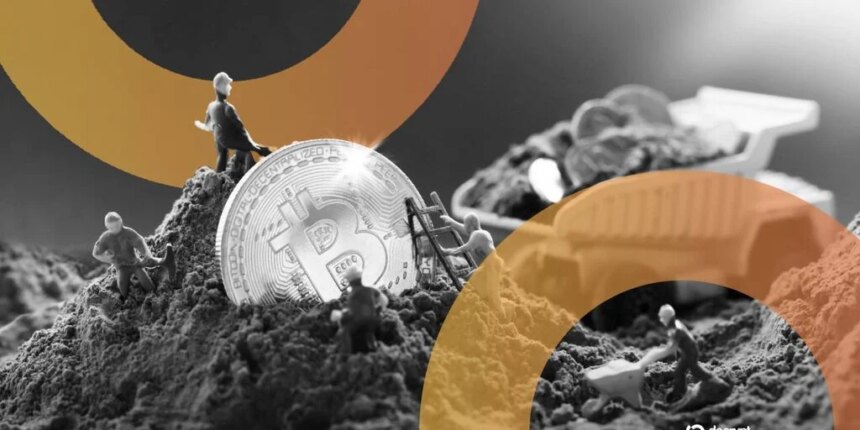
In a remarkable twist within the world of cryptocurrency, a Bitcoin miner has achieved an extraordinary feat by renting just $75 worth of hash power and subsequently discovering a solo block, netting a reward valued at approximately $200,000. This milestone occurred early Tuesday, highlighting the unpredictable nature of solo Bitcoin mining.
The miner in question utilized Braiins’ hash power marketplace to rent the minimum available hash rate of 1 Petahash per second (PH). This platform enables users to lease mining capacity directly, circumventing the need for physical hardware management. Given the current dynamics of Bitcoin mining, success at this rented capacity is exceedingly rare—estimated to occur roughly once every 21 years or about 1 in every 1.1 million blocks, according to data from SoloChance.com.
Analysts often describe solo mining as akin to “playing the lottery,” stressing the unlikelihood of striking it rich without substantial investment in mining infrastructure. Indeed, while this miner’s luck has ignited excitement, the broader landscape of Bitcoin mining remains dominated by large pools that possess extensive computational power necessary for solving the cryptographic puzzles central to the Bitcoin network.
This latest success story is part of an intriguing trend, where several solo miners have recently reaped significant rewards. Just in January, two individual miners received rewards exceeding 3.1 BTC each, collectively worth around $300,000 at the time. A similar event unfolded in December, when another miner earned over $282,000.
It’s worth noting that these individual victories are becoming increasingly noteworthy against the backdrop of a rising global hashrate, which has surpassed 1.1 Zhash per second on average, as reported by Bitinfo. To put this growth into perspective, the overall computational power of the Bitcoin network was approximately 730 Ehash per second just a year ago—an increase of about 61% over the past year.
The surge in hashrate may be partially attributed to miners in regions like China, as North American mining pools have recently witnessed a downturn in their shares of computational power. This decline is often linked to some miners redirecting their focus toward the burgeoning demand for AI computing capabilities, with companies such as Bitfarms discontinuing Bitcoin mining while others like Riot Platforms pivot to capitalizing on AI opportunities.
As the Bitcoin mining landscape continues to evolve, experts and enthusiasts alike will be paying close attention to both the increasing rarity of solo mining victories and the shifting dynamics within mining operations across the globe.