The latest meeting of the Federal Open Market Committee concluded on Wednesday with both predictable and unexpected developments regarding U.S. monetary policy. The Federal Reserve enacted a quarter percentage point interest rate cut, aligning with market expectations, but the session revealed notable dissent within the committee.
Two voting members, one advocating for a more aggressive approach and the other against any reduction, highlighted differing perspectives among policymakers. Governor Stephen Miran voted “no,” preferring a substantial half-point cut, while Kansas City Fed President Jeffrey Schmid opposed the rate decrease altogether, voicing concerns shared by a growing faction of inflation hawks who fear the committee’s easing stance may aggravate inflation.
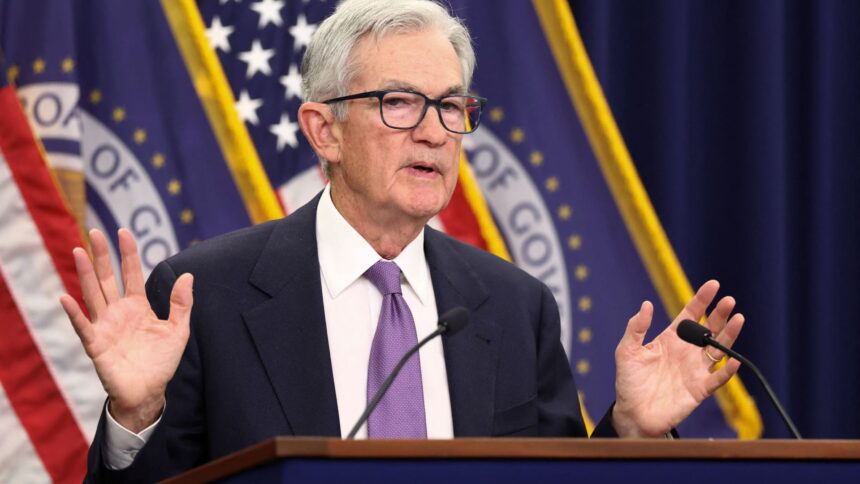
In a notable display of assertiveness, Chair Jerome Powell countered widespread speculation of another rate cut in December, which had been deemed nearly certain by market analysts. “A further reduction in the policy rate at the December meeting is not a foregone conclusion. Far from it,” Powell stated during his press conference, emphasizing the distinct and contentious opinions among the 19 participants of the meeting. He indicated that the meeting minutes, due in three weeks, would echo these varying viewpoints.
The session also confirmed the imminent end of quantitative tightening (QT), with the committee stating that the process of reducing its $6.6 trillion balance sheet will conclude after upcoming operations in November. While Powell dismissed the likelihood of a December rate cut, he noted that the termination of QT could have a similarly significant impact on the economy. Additionally, the Fed plans to shift its strategy by reinvesting maturing mortgage notes in short-term Treasury bills, resulting in a portfolio that tilts toward shorter durations.
When addressing inflation, Powell acknowledged a slight easing towards the Fed’s target of 2%, with current rates hovering around 2.8% based on their preferred metrics. He highlighted that import tariffs are currently contributing to inflation figures, although he believes their effects will be temporary. The upcoming inflation data for October, notably absent due to a government shutdown, will remain crucial for evaluating economic conditions.
Despite the uncertainty surrounding the shutdown, Powell asserted that existing public and private data indicate a consistent outlook of moderating growth, rising unemployment, and inflation that is still considered “somewhat elevated.” He maintained that the prediction for employment and inflation had not drastically shifted since the last committee meeting in September.
Reactions to Powell’s statements reflected a range of apprehensions and interpretations. Dan North, a senior economist at Allianz, noted Powell’s strong dismissal of the December cut expectations, while Rick Rieder of BlackRock suggested that the chances for a December reduction are decreasing as the Fed may defer further accommodative measures until the new year, potentially under a new leadership. Heather Long, chief economist at Navy Federal Credit Union, remarked that while Powell stressed the uncertainty regarding December, many still perceive a rate cut as likely, driven by the Fed’s reluctance to precipitate an economic downturn.
The meeting reinforced the complexity of inflation and employment dynamics confronting the Fed, as the central bank navigates the intricacies of an evolving economic landscape.