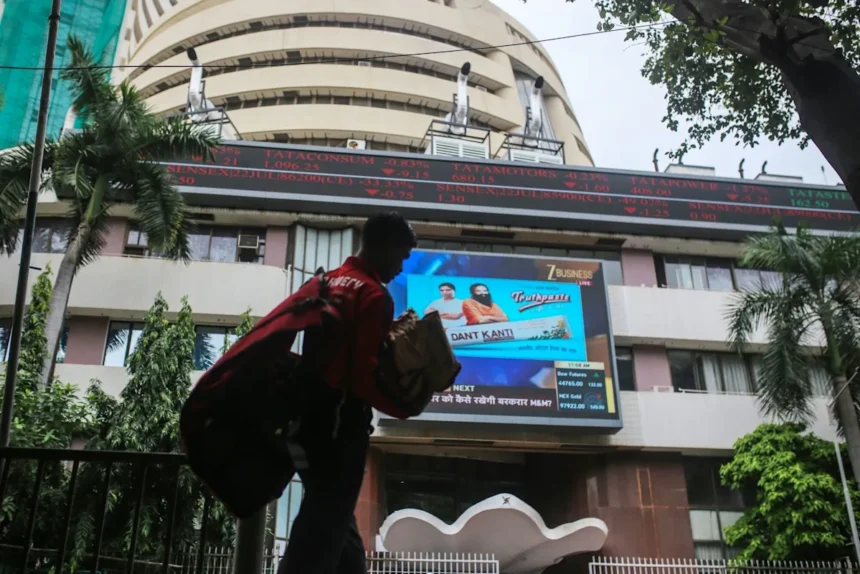
Indian equities experienced a notable decline as heightened tensions in the Middle East triggered a widespread risk aversion among investors. The NSE Nifty 50 Index fell by 1.2%, closing at its lowest level in over a month, having previously dipped by as much as 2.1% during trading hours. This decline has erased all gains made since a trade agreement with the United States on February 2.
The ongoing conflict and a significant spike in oil prices are raising concerns that recovery in India’s equity market—valued at approximately $5.1 trillion—could be delayed. India’s market had already been lagging behind major counterparts since late 2024, partially due to subdued earnings growth and comparatively lower investments in artificial intelligence sectors than those seen in markets like China, South Korea, and Taiwan.
Investment experts expressed alarm regarding the immediate outlook for Indian risk assets, encompassing equities, bonds, and currencies. The anticipation of increased oil prices and a strengthening US dollar adds to the uncertainty currently facing these markets. The India VIX, a measure of market volatility, surged to its highest level since June 2025, reflecting the growing anxiety among investors.
Engineering firms were particularly affected, with major player Larsen & Toubro Ltd. witnessing a 5% drop. The company, which has a significant portion of its order book tied to the Middle East, faced pressure alongside peers like KEC International Ltd., which saw a decline of 3.5%. Additionally, Reliance Industries Ltd. and InterGlobe Aviation Ltd. contributed to the benchmark’s losses.
Analysts note that the escalation in the Middle East presents an increasing risk for oil prices, which could negatively impact various sectors, including oil marketing, aviation, and chemicals due to potential margin pressures from rising input costs. Given that India is heavily reliant on energy imports, any increase in oil prices could considerably widen the trade deficit and negatively impact the rupee and the equity market. Estimates suggest that a rise of $1 in crude prices could add around $2 billion to India’s annual import bill.
While there had been some optimism following the trade agreement with the US, the continuous downturn in technology shares has dampened investor sentiment. Though foreign funds had recently turned net buyers after pulling significant money out in January, the inflows remained modest in light of the prevailing economic challenges.
Market analysts further outlined that the implications of rising crude prices can severely impact India, as it heightens the current account deficit, fuels domestic inflation, and places downward pressure on the rupee. This economic pressure could potentially lead to a withdrawal of foreign investment as global investors seek to minimize risk exposure amid volatile conditions.