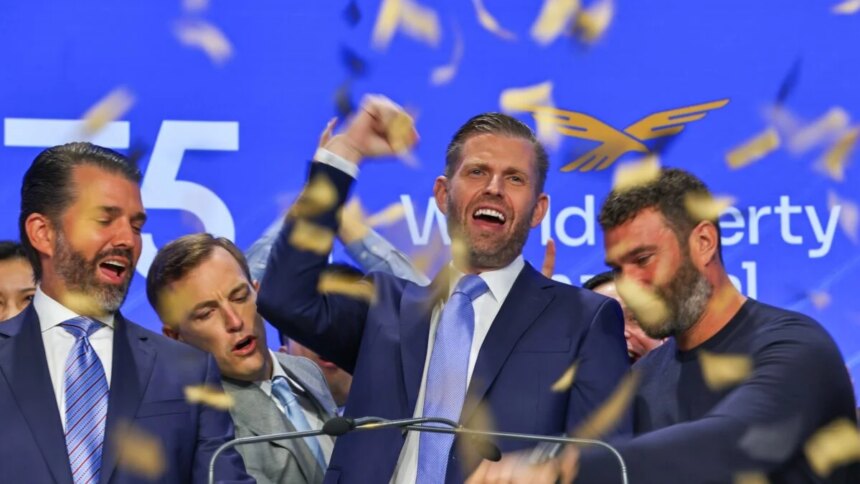
Trump-affiliated crypto ventures are currently facing intense scrutiny and turbulence from various fronts. World Liberty Financial is now at the center of a lawsuit initiated by crypto mogul Justin Sun. This legal action comes amidst discussions around the CLARITY Act, which may introduce provisions that would effectively prevent Trump from profiting from cryptocurrency while in office. Additionally, Eric Trump’s removal from the leadership section of the Alt5 Sigma Corp website highlights the ongoing challenges within these ventures.
In a remarkable shift, it was reported that the Trump family had generated $1.4 billion from crypto-related enterprises in 2025, primarily through token sales and memecoins. This financial windfall was significant in offsetting losses in other business areas. However, the volatility surrounding World Liberty Financial and its affiliates has raised ethical red flags, especially given the allegations of corruption that intertwine with Trump’s presidency. Notably, one damaging factor is the alleged quid pro quo involving the pardon of former Binance CEO Changpeng Zhao.
The ethical concerns associated with the CLARITY Act have been a focal point for Democrats, prompting them to call for reforms for several months. Republican Senator Thom Tillis recently voiced support for incorporating these ethics provisions into the bill, indicating that it is poised for a hearing. With crucial midterm elections approaching, it’s believed that swift action is needed to move the legislation forward, as the outcome could hinder crypto-friendly initiatives post-elections.
The proposed legislation aims to offer regulatory clarity on crypto tokens and the broader industry, a process that has thus far been impeded by conflicts between crypto entities and traditional banks over stablecoin yields. Current predictions from market analytics platform Kalshi suggest there is a 46% chance the CLARITY Act could be enacted this year.
In addition to the potential legislative hurdles, World Liberty Financial is grappling with Sun’s lawsuit, which stems from the freezing of assets that belonged to him and his associated entities. This lawsuit follows Sun’s prior engagement with the SEC, where he was part of a group of Democratic senators questioning the possible conflicts surrounding his substantial investments in World Liberty Financial’s WLFI token and the TRUMP memecoin.
Further complicating matters, the company has faced backlash for using its proprietary tokens as collateral to secure loans in stablecoins. This tactic has drawn comparisons to practices that were observed at the now-defunct crypto exchange FTX, enhancing scrutiny on its financial operations.
Similarly, Alt5 Sigma Corp has encountered its own set of setbacks, with its stock plummeting approximately 85% over the past year. Reports indicate that Eric Trump’s role within the company has been significantly reduced, with his name recently removed from its leadership page.
The drama surrounding these Trump-embedded crypto projects coincides with broader concerns in the crypto industry regarding ethics and transparency. The Democrats have also raised flags about potential conflicts involving Tether, the issuer of the USDT stablecoin, linking it to a loan to a trust associated with Commerce Secretary Howard Lutnick.
Compounding the challenges, the wider crypto landscape is wrestling with centralization issues, which have been exposed in recent months. The recent freezing of USDT assets tied to Iran illustrates that stablecoins can be manipulated by their issuers or the regulatory bodies above them. Other crypto platforms, like Arbitrum, have resorted to centralized solutions to address user complaints related to hacks, calling into question the industry’s commitment to the “code is law” ethos. Nonetheless, there remains a persistent belief in the potential of Bitcoin as a neutral, global currency, underscored by reported interest from Iran in utilizing it in the Strait of Hormuz.