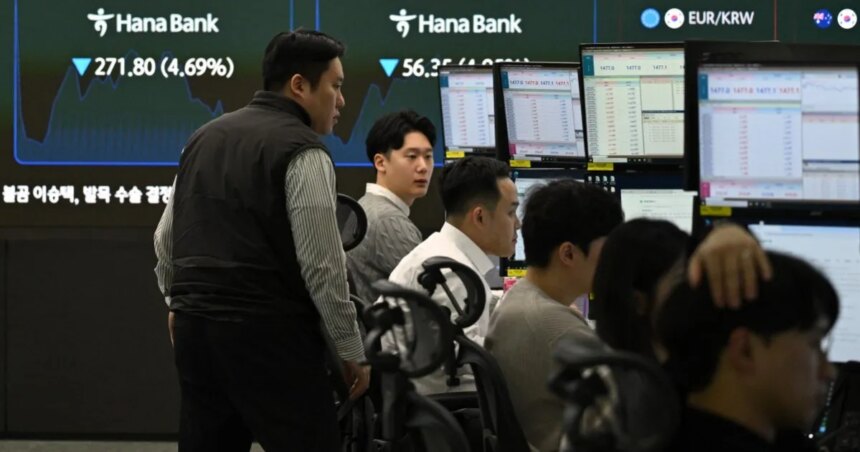
South Korea’s stock market has experienced an unprecedented decline, with the benchmark KOSPI index tumbling 12.06 percent on Wednesday. This dramatic fall surpasses the 12.02 percent drop seen after the September 11, 2001 attacks in the United States, marking the steepest single-day decline in the nation’s history.
The fallout from the escalating US-Israeli conflict with Iran has been a significant driver behind this downturn. Initially, the KOSPI dropped by 7.2 percent on Tuesday, signaling a distressing trend and a tough two-day period for investors that is being described as the worst in decades.
As trading commenced, South Korean financial authorities swiftly activated a circuit breaker designed to halt trading for 20 minutes after losses exceeded 8 percent, highlighting the urgency of the situation. The KOSPI index saw some recovery later in the day, eventually stabilizing at around a 10 percent loss by 05:00 GMT.
The widespread losses affected major corporations, including tech giants such as Samsung Electronics, SK Hynix, and LG Electronics. However, the most significant impact was felt in the shipping and logistics sectors, which faced severe declines as traffic through the vital Strait of Hormuz, a critical conduit for global oil transport, came to a standstill. Companies like Pan Ocean, HMM, and KSS Line reported drops in their stock values between 16 and 17 percent.
South Korea relies heavily on foreign oil and gas, with approximately 98 percent of its fossil fuel needs met through imports, according to US Energy Information Administration estimates. The market downturn arrives on the heels of a remarkable start to 2026, where the KOSPI had soared over 40 percent in the first two months, significantly outpacing its international counterparts.
On the global front, US markets reacted to the ongoing unrest, with benchmarks such as the S&P 500 and the tech-heavy Nasdaq Composite experiencing drops of about 1 percent. This response indicates that market participants are increasingly cautious as the conflict shows no signs of abating. The US and Israel continue their military operations against Iranian positions, while Iran has been reciprocating with strikes against targets associated with Israel and its allies in the Gulf, notably Qatar and the United Arab Emirates.
As the war enters its fifth day, the economic ramifications are intensifying, with South Korean investors bracing for further turbulence in the days to come.