CNBC’s Jim Cramer provided insight into the current state of the stock market during a segment of “Mad Money.” He expressed concerns that the market appears to be in a holding pattern, primarily due to ongoing conflicts in the Middle East and emerging uncertainties. “Until then, the bottom line is we have to face the fact that the market’s in limbo,” Cramer stated, acknowledging the challenges investors face as they navigate the unpredictable market landscape.
Cramer’s remarks came following a tumultuous trading session on Wall Street, where the S&P 500 fell by 0.5%, reversing a prior day’s rally that saw the index rise by 0.8%. The Dow Jones Industrial Average and Nasdaq Composite also experienced declines, although they ended up recovering slightly from more significant losses. Cramer attributed the market struggles to soaring oil prices, with U.S. crude prices surpassing $80 a barrel, amid fears of a protracted disruption of global fuel supplies linked to the ongoing U.S.-Iran conflict.
“Its easy to see how this happened,” Cramer remarked, noting how initial optimism about the economic impacts of the Iran conflict quickly faded as oil prices surged. He urged investors to remain calm and not to react hastily to market fluctuations, emphasizing, “Stay in if you want to get there too.”
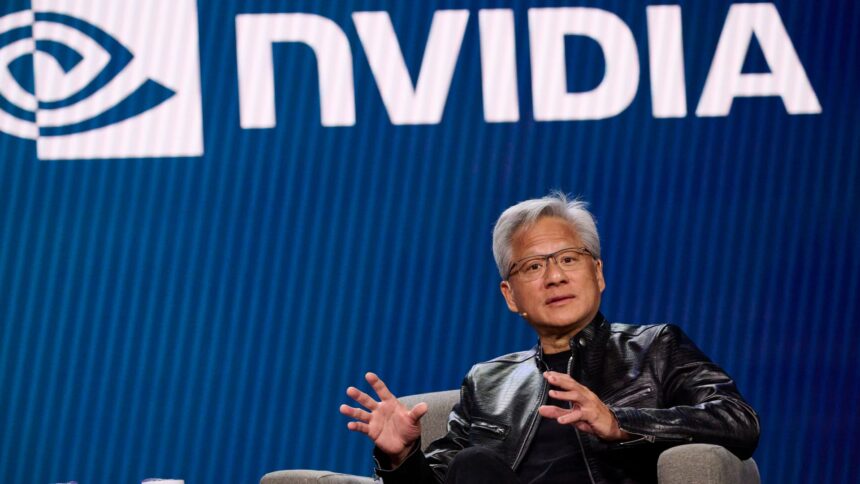
Adding to the market’s volatility, Cramer pointed to potential new restrictions on artificial intelligence chip exports, with reports emerging that the Trump administration is considering reinstating control over these shipments. This could again impose significant hurdles for companies in the semiconductor sector, which had benefited from a liberalized export regime during the Biden administration. Following the news, shares of Nvidia—one of the leading AI chipmakers—fluctuated dramatically before ultimately finishing slightly higher. Meanwhile, shares of Advanced Micro Devices dropped by 1.3%.
“Nobody wants to touch the semis if their total addressable market is about to get clubbed by the government,” Cramer commented, highlighting the nervousness surrounding semiconductor stocks.
Despite these challenges, Cramer maintained a cautiously optimistic outlook, noting that the oil price could stabilize and regulatory issues might be resolved. However, he stressed that with the ongoing war, the market’s potential for a rally is hindered, painting a complex picture of the current economic climate.
In conclusion, Cramer’s commentary underscored the need for investors to adapt to the uncertainty that characterizes the market today while remaining hopeful for future recovery.