In a dramatic turn of events, oil futures have soared to unprecedented heights this week amid escalating tensions related to the conflict in Iran. This surge has coincided with a sharp downturn in stock markets globally, prompting widespread investor concern.
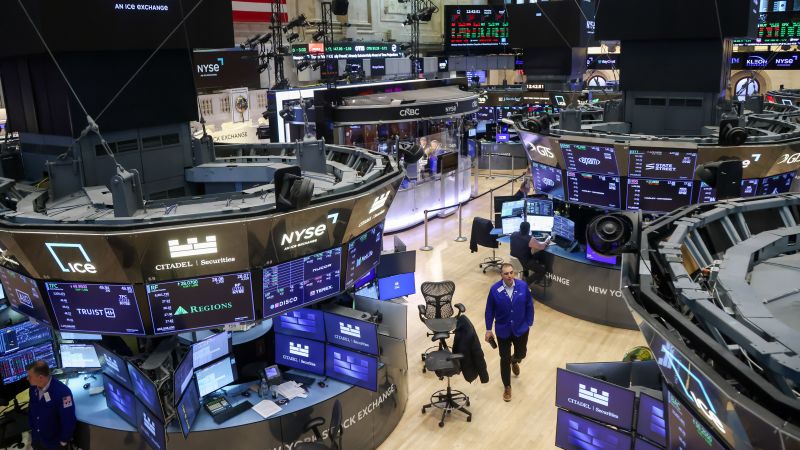
The U.S. stock market experienced a steep decline on Friday, closing significantly lower as rising oil prices and disappointing employment data weighed heavily on investor sentiment. The Dow Jones Industrial Average saw a drop of 453 points, or 0.95%, after experiencing a nearly 950-point decline shortly after the market opened. The S&P 500 fell by 1.33%, while the tech-heavy Nasdaq Composite reported a 1.59% decrease.
Over the course of the week, the Dow suffered a 3% decline, marking its poorest performance since April. The S&P 500 also recorded a weekly loss of 2%, the largest since October. This trend was echoed in international markets, with Europe’s Stoxx 600 index plummeting 5.55% and Japan’s Nikkei 225 sliding 5.5%.
On the commodities front, oil prices reached their highest levels since September 2023. U.S. crude jumped by an astounding 12.2% to $90.90 per barrel, marking its most significant one-day gain since May 2020. Brent crude, the global benchmark, also advanced, rising by 8.5% to $92.69 per barrel. The significant price increase reflects a broader trend, with U.S. and Brent oil gaining approximately 36% and 27%, respectively, in just one week, the largest weekly spike for U.S. oil since futures began trading in 1983.
Bob McNally, president of Rapidan Energy Group, described the current market climate, stating, “Investors have gone from complacency to the edge of panic. And we’re about to have a panic moment.” The announcement made by President Donald Trump on social media, declaring that “there will be no deal with Iran” unless there is unconditional surrender, further fueled market anxieties.
Craig Johnson, chief market technician at Piper Sandler, noted that the stock market has become highly susceptible to new upheavals in the Middle East, positing that conditions would likely lead to further declines. Despite an initial surge that brought U.S. oil prices above $92 per barrel, evening trading saw a slight pullback after the U.S. International Development Financial Corporation announced plans to reinsure up to $20 billion in maritime losses due to the conflict.
As fears rose, Wall Street’s fear gauge, known as the VIX, surged by 24%, reaching its highest level since April. Concerns over energy inflation have been compounded by predictions from Qatar’s energy minister, Saad al-Kaabi, who indicated that all Gulf energy exporters might be compelled to halt production, further elevating oil prices. Such increases in energy costs could precipitate a renewed wave of inflation, raising alarms among investors.
Adding to the unease was a weaker-than-anticipated jobs report for February, which revealed a loss of 92,000 jobs and an uptick in the unemployment rate to 4.4%. Jeff Palma, head of multi-asset and macro research at Cohen & Steers, described the dual pressures of job losses and rising oil prices as a challenging scenario for the markets.
Analysts highlighted ongoing trade uncertainties and stagnant population growth as further indicators of a potentially faltering economy, especially coupled with rising energy prices. The bond market reacted with fluctuations, as the yield on the 10-year Treasury note climbed, reflecting investor hesitations about inflation stemming from soaring energy costs. The current yield is at 4.14%, having risen from 3.96% just earlier in the week.
Elyse Ausenbaugh from JP Morgan Wealth Management articulated the complexities facing the Federal Reserve, emphasizing a precarious mix of inflation and labor market weaknesses that complicate fiscal decision-making.
Additionally, the U.S. dollar index showed some volatility, pausing its earlier gains following the disappointing jobs report. Having risen 1.3% this week—its best performance since August—investors have gravitated toward the dollar as a safe haven amidst these turbulent conditions.
Economic strategist Ellen Zentner warned that the latest jobs report could place the Federal Reserve in a challenging position, providing a case for rate cuts while also acknowledging the risks of rising oil prices driving inflation. This precarious balance reflects broader concerns about the state of the economy and the potential for prolonged financial instability.