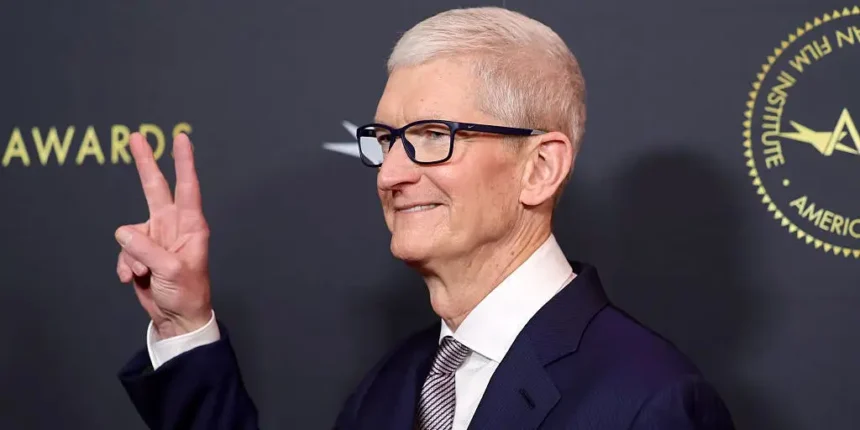
Steve Jobs, the iconic co-founder of Apple, is widely remembered for revolutionizing the tech landscape through innovation in product design, with creations like the iMac, iPod, iPhone, and iPad becoming staples of modern life. His visionary leadership set the stage for what Apple would become, but his successor, Tim Cook, has taken the company in a distinctly different yet equally impactful direction.
As Cook prepares to step down as CEO later this year, it’s clear that his tenure has been marked by remarkable financial success and strategic maneuvering. Under his leadership, Apple has transformed into a financial powerhouse, optimizing the manufacturing and marketing of Jobs’s innovations while also launching new product lines. This dual focus has led to nearly 15 years of market dominance, with Apple’s stock surging by nearly 2,000% — a performance approximately four times better than the S&P 500.
Cook’s stewardship has resulted in an unprecedented increase in market capitalization. When he became CEO in 2011, Apple was valued at about $350 billion. By 2018, the company made headlines as the world’s first trillion-dollar entity, and it now boasts a staggering market value of around $4 trillion, contributing an astounding $3.7 trillion to its market cap during Cook’s leadership.
During Cook’s era, 2019 proved to be particularly fruitful, showcasing an 80% annual stock gain. This boom was fueled by significant growth in Apple’s wearables sector, which includes products like the Apple Watch and AirPods. As the pandemic reshaped consumer behavior in 2020, demand for Apple’s computers and services saw an impressive uptick as people adapted to remote work and entertainment.
One of Cook’s most notable financial strategies has been his commitment to share buybacks, amounting to around $700 billion — a record in corporate history. This approach acts as a financial tool that reduces the number of shares available in the market, thereby increasing the per-share value for remaining shareholders. By establishing this financial strategy, Cook not only bolstered Apple’s stock price but also signaled to investors a strong belief in the company’s value.
In addition to hardware, Cook has expertly pivoted Apple into the services sector, overseeing revenue growth from a meager $13 billion in 2012 to an impressive $109 billion last year. What started primarily with iTunes and the App Store has since expanded to include offerings like Apple Care, iCloud, Apple Music, Apple TV, and Apple Pay. This significant expansion reflects Cook’s understanding of market trends and consumer needs, demonstrating that he successfully carved out a lucrative niche for Apple in the services domain.
Equally impressive is Cook’s focus on wearables, which has become a substantial business unit in its own right. The wearables segment, driven largely by the Apple Watch and AirPods, is now generating approximately $36 billion in revenue—surpassing the market capitalizations of major companies like Prudential Financial, United Airlines, and Dollar General.
As Cook prepares to hand over the reins, his legacy at Apple is clearly defined not just by new products but also by extraordinary financial growth and strategic evolution, ensuring that Apple’s place at the forefront of the technology sector remains secure for years to come.