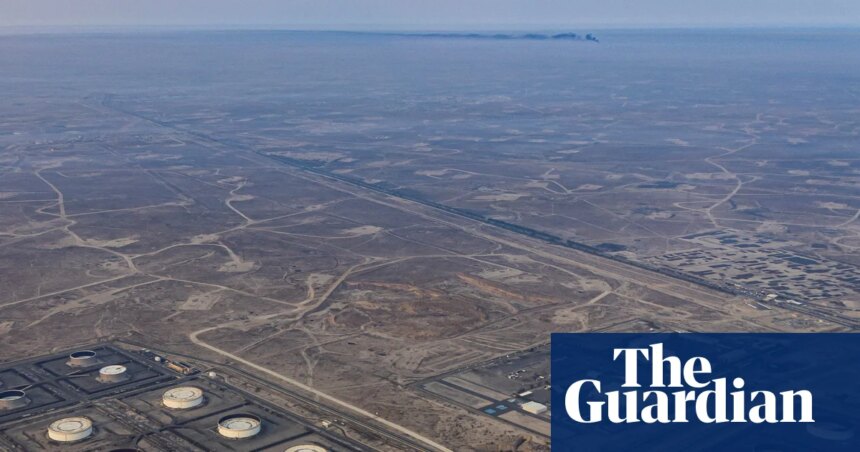
The recent conflict in Iran has caused oil prices to surge past $90 a barrel, marking the highest weekly gains seen since the onset of the Covid-19 pandemic six years ago. Factors contributing to this spike include reports of Kuwait cutting oil production at certain fields due to a lack of storage space, pushing Brent crude prices to as high as $91.89 on Friday. This figure represents a significant increase from approximately $72.50 prior to the outbreak of hostilities.
Since the attacks by the US and Israel on Iran, oil prices have risen by more than 25%, which is the largest weekly increase since the week of April 3, 2020. Concerns are growing about a potential storage crisis in the Middle East that could necessitate production halts by some of the largest oil-producing nations. According to analysts at Kpler, storage facilities in Saudi Arabia and the UAE could reach capacity within 20 days, leading to possible shutdowns. Such actions would be a last resort, as restarting production can take weeks and further strain the market.
Adding to these worries, Qatar’s energy minister warned that if the conflict escalates, all Gulf energy exporters might cease production within weeks, potentially driving oil prices to $150 per barrel. Saad al-Kaabi expressed that even a swift end to the war would lead to a prolonged recovery period for Qatar’s liquefied natural gas (LNG) exports, especially after an Iranian drone strike impacted a key terminal. Qatar is responsible for around 20% of global LNG exports.
While the UK only sources about 2% of its gas from Qatar, this week’s price surges on the UK gas market have reached three-year highs. This increase is partly due to fears that Europe may have to pay higher prices to secure gas from Asian markets if Qatari deliveries remain halted.
Tensions in the region are further compounded by threats from Iran’s Islamic Revolutionary Guard Corps, which has warned of severe consequences for any Western tanker that attempts to navigate the Strait of Hormuz, a crucial passageway for around 20% of the world’s oil and LNG. Since the beginning of the attacks on Iran on February 28, at least nine vessels have reportedly been targeted, according to Lloyd’s List.
Market confidence has been shaken, with analysts noting that recent assurances from the U.S. government, which included offers for tankers to receive military escort and insurance, have failed to reassure investors. Approximately 600 vessels, including 15 LNG carriers and 195 oil tankers, are currently in the Gulf, raising the stakes for maritime trade.
The surging gas prices have intensified inflation concerns, adversely impacting UK government bond markets. Yields for five- and ten-year bonds are set to experience their largest one-week increase since the controversial “mini-budget” proposed by former Prime Minister Liz Truss in September 2022. Expectations for a UK interest rate cut this month have diminished, with market projections dropping from an 80% possibility to just 15%.
The situation has also affected Eurozone bond prices, with yields on track for significant increases as the market begins to anticipate a potential rate hike from the European Central Bank by the end of the year.
Asia-Pacific stock markets, heavily reliant on energy imports from the Gulf, faced their worst week since the COVID-19 pandemic began. In the UK, the FTSE 100 index fell by over 5%, marking its most challenging performance since April 2025. The pan-European Stoxx 600 index mirrored these losses with a similar decrease.
Airline stocks suffered greatly, with IAG, the parent company of British Airways, experiencing a decline of over 12%. Low-cost carrier Wizz Air saw about a 20% drop, particularly after warning that the ongoing crisis in the Middle East could cost the company €50 million in profits.
Despite these challenges, the US dollar has strengthened since the onset of the conflict, while gold prices experienced a downturn of approximately 3.5%, falling below $5,100 an ounce. The interplay between these economic factors continues to create uncertainty as the situation in the Middle East evolves.