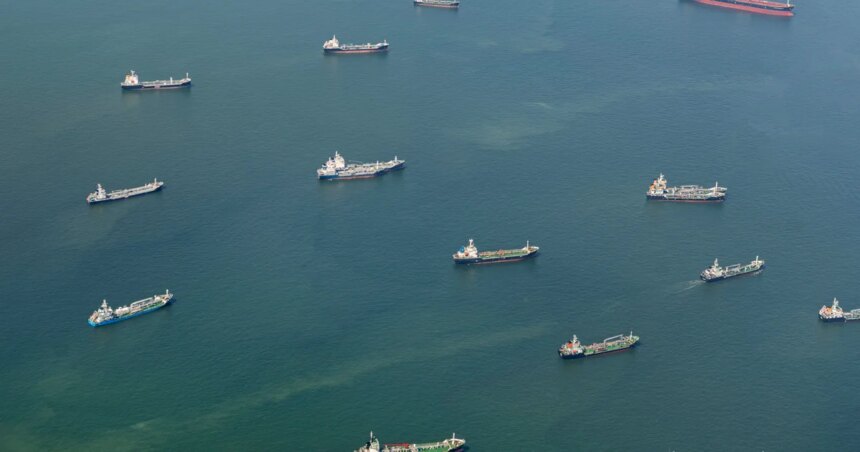
The White House announced on Thursday that the Trump administration is contemplating a temporary waiver of the Jones Act amid ongoing hostilities in Iran. This century-old legislation mandates that all goods transported between U.S. ports must be carried on vessels that are U.S.-built, U.S.-flagged, and staffed by U.S. crews. The potential waiver aims to facilitate the flow of essential energy supplies and agricultural goods to U.S. ports.
White House spokeswoman Karoline Leavitt emphasized the administration’s intent to act in the interest of national defense but clarified that no final decision has been made. Experts believe that suspending the Jones Act could allow foreign vessels to transport fuel between U.S. ports, helping to alleviate supply chain disruptions and potentially reduce energy prices.
The backdrop to this potential policy change is the recent spike in oil and gas prices following U.S. and Israeli military actions in Iran. Since the strikes on February 28, fuel costs have soared, with Brent crude oil prices climbing from around $60 per barrel earlier in January to over $100, marking an 8% increase on Thursday alone. Meanwhile, the West Texas Intermediate, the benchmark for U.S. crude, experienced a near 9% surge, reaching $95.02 per barrel.
Despite efforts by the U.S. administration and the International Energy Agency, which announced that member nations plan to release 400 million barrels into global markets to stabilize oil supplies, energy costs have continued to rise. Gas prices have also been affected, reaching $3.60 per gallon, a significant jump of about 60 cents since the conflict began, as reported by AAA. This increase contributes to mounting inflationary pressures felt by consumers across the country.
The evolving situation highlights the delicate balance between national security measures and domestic economic stability, as the administration weighs its options in response to the challenges presented by the ongoing conflict.