The cryptocurrency industry has intensified its campaign tactics by labeling candidates who support consumer protections for digital currencies as corrupt. This negative strategy is notably evident in two Illinois congressional primaries, where a crypto political action committee, Fairshake PAC, has launched smear campaigns against candidates aligned with progressive values.
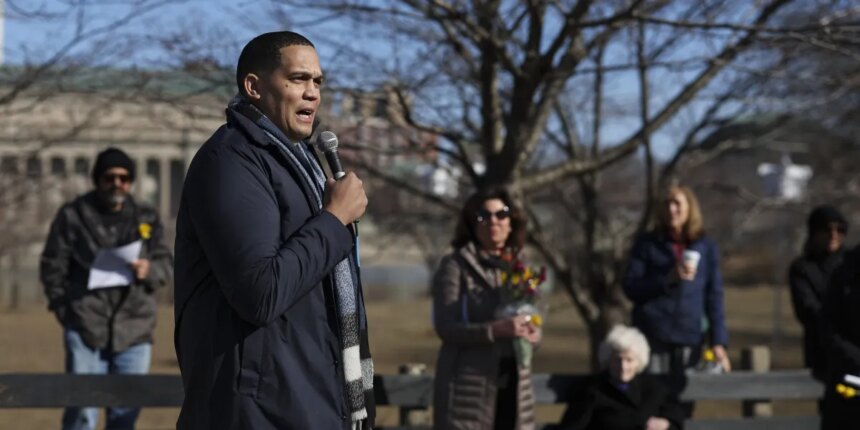
These attacks primarily target state Sen. Robert Peters and state Rep. La Shawn K. Ford, both of whom supported legislation aimed at regulating the crypto sector in Illinois. The regulation, backed by Democratic Governor JB Pritzker, mandates that crypto firms register with the state and adhere to local regulations if they wish to operate within Illinois. In contrast, the cryptocurrency industry has long resisted state-level oversight, advocating for a unified federal framework with more lenient regulations.
Fairshake PAC has invested a staggering $3.3 million in negative advertising against these candidates in the state’s 2nd and 7th Congressional Districts, according to analyses by local political consultants. Industry insiders see this as an act of retaliation against lawmakers who champion consumer protections. Jeff Hauser from the Revolving Door Project criticized this approach, implying that using anti-corruption rhetoric from a “corrupt actor” dilutes the effectiveness of genuine anti-corruption initiatives.
Peters, who has gained endorsements from prominent progressives like Sen. Bernie Sanders and Sen. Elizabeth Warren, has been branded by Fairshake as a “corporate pawn” funded by special interests. In response to the mailers, Peters remarked that the attacks were backed by donors affiliated with former President Donald Trump, aiming to manipulate the political landscape to favor unregulated crypto practices. Peters emphasized that his progressive alliances stand in stark contrast to the claims made against him.
Similarly, Ford has faced a barrage of $2.5 million in attack ads, including misleading advertisements connected to a past legal issue. In 2012, Ford was indicted on multiple bank fraud charges, but the case ultimately fell apart, and he only pleaded guilty to a misdemeanor tax charge. He has publicly condemned the campaign tactics as slanderous and highlighted the urgent need for campaign finance reform to eliminate dark money influences in politics. Ford’s campaign has also issued a cease-and-desist letter to Fairshake PAC regarding these advertisements.
Local media scrutiny has pointed out the misleading nature of the ads aimed at Ford, reinforcing his argument that voters are being duped with false information. Ford further criticized the crypto industry’s close ties to Donald Trump, noting that figures like Brian Armstrong, CEO of Coinbase, have collaborated with Trump to secure favorable regulatory conditions. Despite the industry’s attacks on his qualifications, Ford pointed out the contradictions in their endorsements of Trump, who has faced separate legal troubles.
As the primary elections approach, these tensions illustrate not only the animosity between progressive lawmakers and the rapidly evolving crypto industry but also raise broader questions about the integrity and transparency of political funding and campaign strategies in the digital age.