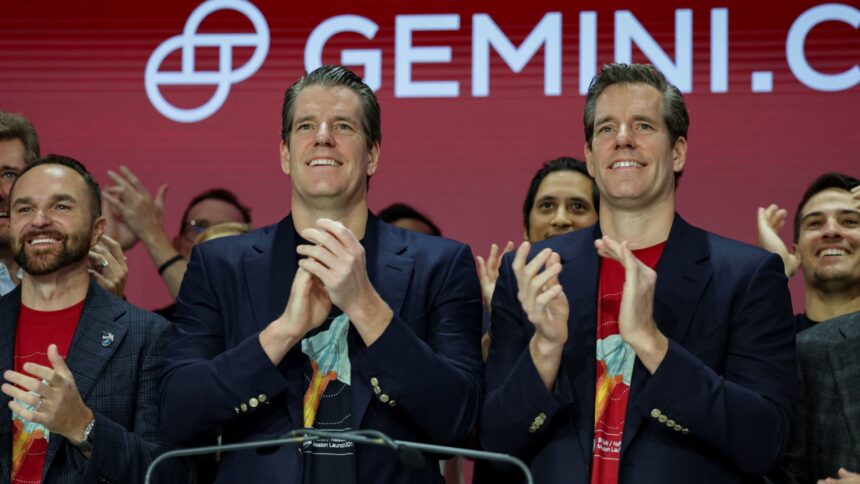
Gemini, the cryptocurrency exchange co-founded by Tyler and Cameron Winklevoss, has received significant approval from the U.S. Commodity Futures Trading Commission (CFTC) to run its own regulated derivatives clearinghouse. This development marks a pivotal moment for the company, as it aims to solidify its presence in prediction markets while potentially paving the way for the expansion into perpetual futures trading.
With this approval, Gemini gains the ability to clear and settle trades internally rather than depending on external infrastructures, effectively granting the company more oversight over its prediction market products. Cameron Winklevoss emphasized the importance of this move, stating, “Given the opportunity size with prediction markets… owning and operating the marketplace end-to-end is powerful.” He expressed confidence that this strategic control would allow Gemini to swiftly adapt to market changes and enhance customer experiences.
In the broader crypto landscape, exchanges are increasingly integrating products like event contracts and futures in an effort to stabilize revenue amidst fluctuating cryptocurrency prices. Winklevoss predicted that prediction markets could rival traditional capital markets in terms of scale and significance, underscoring Gemini’s long-term commitment to this area while also indicating intentions to broaden derivative offerings within the cryptocurrency sector.
This approval from the CFTC arrives shortly after scrutiny arose from a lawsuit filed by New York Attorney General Letitia James, which claimed that Gemini’s prediction market products fall under state gambling regulations and necessitate licensing from the New York State Gaming Commission. The CFTC has countered this claim by asserting that such markets are regulated under federal derivatives law.
Currently, Gemini faces pressures from investors following a considerable drop in stock prices post-IPO. Although shares surged by 14% upon debut, trading initially at around $45, they have since plummeted by nearly 90%. The downturn coincides with a 30% decrease in Bitcoin’s value over the same timeframe, highlighting the firm’s vulnerability to the volatility inherent within the crypto market.
Investor confidence has also been shaken by ongoing losses, notable executive exits, and a strategic pivot toward incorporating artificial intelligence and enhancing prediction markets. A class-action lawsuit has emerged, alleging Gemini misled investors regarding its strategies during the IPO process.
Despite these challenges, Winklevoss defended the potential of prediction markets, arguing that skeptics dismiss their capabilities as a transient trend, overlooking their power as a sustainable growth driver. He elaborated on the intrinsic value of prediction markets, noting their capacity to harness collective knowledge regarding critical macroeconomic events.
As spot crypto trading remains highly cyclical and contingent on market sentiment, the introduction of derivatives such as event contracts offers an avenue for consistent user engagement. Gemini launched its event contracts following CFTC approval and joins other firms, like Robinhood and Coinbase, that are also venturing into the prediction market space.
Winklevoss praised the rapid innovation within the crypto industry, referencing Bitcoin, stablecoins, and decentralized finance protocols as prime examples of emerging assets with real-world applications. He articulated the firm’s objective to deliver maximum value to customers in the shortest time possible, navigating beyond mere cryptocurrency offerings. Building on their predictive capabilities, Gemini plans to broaden its services by introducing equities trading, which will diversify revenue streams and buffer against fluctuations in crypto markets.
Thus, the journey of Gemini reflects an adaptive strategy aimed at ensuring long-term viability in a transforming financial landscape, while continuing to explore innovations that align with emerging market trends.