The S&P 500, a key benchmark for the U.S. stock market, is currently hovering around 5% below its record high following three consecutive weeks of decline. This downturn can be attributed to a combination of economic factors.
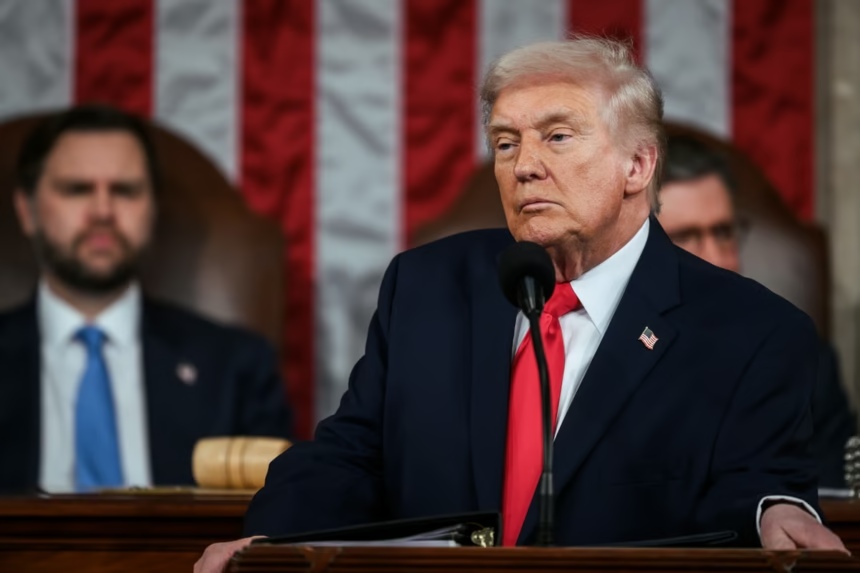
One prominent issue affecting market stability is President Trump’s implementation of tariffs. While the administration has claimed to be fostering an economic boom, the reality presents a different narrative. The U.S. GDP saw an increase of just 2.1% last year, marking the slowest growth rate since 2016 when excluding the pandemic year of 2020. Additionally, job growth has significantly lagged, with only 181,000 jobs added last year—making it the slowest increase since 2009.
Rising oil prices are compounding these economic challenges. The ongoing U.S.-Iran conflict has led to disruptions in the Strait of Hormuz, a critical artery for global oil supplies. Recent statistics show a dramatic decline in ship transits through the strait, dropping from roughly 150 per day to single digits. As a result, Brent crude oil prices have surged over 40% since late February, reaching $103 per barrel—levels not seen since August 2022. Consumers are already feeling the pinch, with gasoline prices surpassing $3.50 per gallon for the first time in several years.
Adding to the uncertainty is the upcoming midterm election year, which historically brings volatility to the stock market. The S&P 500 has experienced a median peak-to-trough decline of 19% during past midterm years, creating a climate of unease among investors. The trend stems from an expectation that the ruling political party will typically lose a significant number of seats in Congress, leading to doubts about the endurance of current fiscal and trade policies. With heightened tensions surrounding affordability issues in the U.S., supply chain pressures and energy costs are likely to remain focal points for investors.
Valuation concerns also weigh heavily on the current market landscape. The S&P 500’s forward price-to-earnings (P/E) ratio stands at 20.9, which is above the 10-year average of 18.9. This elevated ratio suggests that investors are banking on strong earnings growth moving forward. However, with the potential for slower economic growth amid tariffs and volatile oil prices, there is a risk that earnings may not meet Wall Street’s high expectations, potentially leading to substantial downward revisions.
The precarious nature of the market during midterm elections raises the probability of a more significant decline in the S&P 500. Investors are advised to approach the current climate with caution, favoring high-conviction stocks that are likely to deliver solid earnings growth over the next five years—provided that these stocks are reasonably priced. The landscape is characterized by uncertainty, and while a crash is not guaranteed, the likelihood of a severe market downturn appears to be heightened.