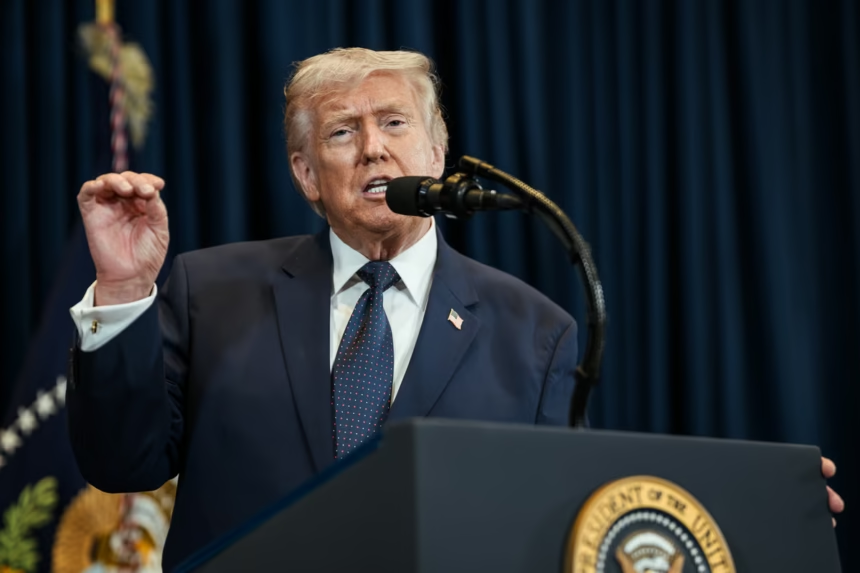
In a significant turn of events for the U.S. stock market, major indexes such as the benchmark S&P 500 and the tech-heavy Nasdaq Composite reached record-closing highs recently. This resurgence follows an upward trend over the past five years during President Donald Trump’s administration, which has seen substantial stock market gains—particularly notable are the impressive 57% rise in the Dow and an astounding 142% in the Nasdaq since he took office.
While robust performance on Wall Street is a common narrative during Trump’s tenure, the sharp increase in stock prices over the past week marks a new chapter. The surge in the S&P 500 and Nasdaq is indicative of ongoing investor confidence, bolstered by technological advancements, particularly artificial intelligence (AI), which industry analysts claim could unleash a market potential of over $15 trillion by 2030.
A critical factor contributing to the current market dynamics is the economic stimulus delivered by the Tax Cuts and Jobs Act of 2017, which slashed the corporate tax rate from 35% to 21%. This tax adjustment incentivized companies to engage in shareholder-friendly tactics, with stock buybacks hitting record numbers recently, reflecting an increase in shareholder returns.
However, this bullish market sentiment faces a formidable challenge stemming from geopolitical tensions exacerbated by President Trump’s recent orders for military action against Iran. The U.S. military’s involvement has led Iran to disrupt one of the world’s most critical oil passages, the Strait of Hormuz, resulting in soaring crude prices and increased inflation.
Inflationary pressures have become a pressing concern as recent data indicated a significant jump, with inflation rising to 3.3% in March, up from 2.4% in February. This inflation spike not only threatens household budgets but also places the Federal Reserve’s anticipated interest rate cuts in jeopardy. Investors had hoped for a more favorable monetary policy to support the costly valuations seen in the stock market; however, projections are now shifting towards possible interest rate hikes instead.
The S&P 500’s valuation has reached a 155-year high, with the Shiller Price-to-Earnings Ratio indicating extreme pricing levels unseen since the turn of the millennium. As economic indicators waver under the weight of inflation, the repercussions of Trump’s military decisions loom large over Wall Street, raising fears of a potential market crash.
As the economic landscape evolves, the Federal Reserve is now at a crossroads, with its response to the inflation narrative critical for maintaining market stability. Investors are carefully monitoring developments for any shifts in monetary policy that could signal a major revaluation of asset prices in the face of these inflationary threats.