U.S. stock futures faced a slight decline Wednesday evening, as concerns around inflation weighed heavily on investors following a significant drop in the Dow Jones Industrial Average. The Dow futures fell by 71 points, or 0.15%, while the S&P 500 and Nasdaq 100 futures also experienced minor dips of 0.11% and 0.15%, respectively.
In related market movements, oil prices surged, with Brent crude futures surpassing $111 per barrel. Meanwhile, West Texas Intermediate crude futures briefly rose above the $100 mark, reflecting heightened concerns over global supply and economic stability.
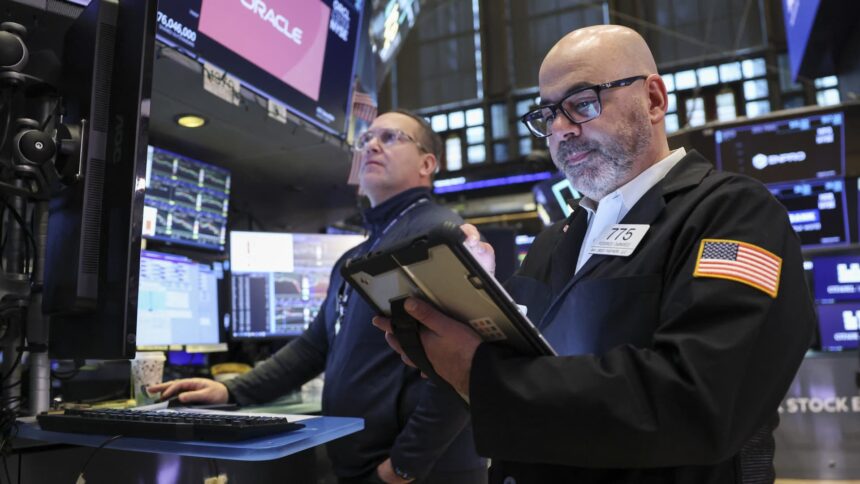
The backdrop of these fluctuations comes after a troubling trading session on the same day, where the Dow plunged by 768 points, or 1.6%, marking a new low for the year. This decline was compounded by the benchmark index touching an intraday low for 2026 and closing below its 200-day moving average, a technical indicator that signals a potentially negative long-term trend. The S&P 500 and the Nasdaq Composite also faced setbacks, retreating by 1.4% and 1.5%, respectively.
Investor anxiety grew following the release of a hotter-than-expected producer prices report, raising inflation expectations in light of recent warnings from the Federal Reserve. The ongoing conflict in Iran further intensified fears that the U.S. economy might be heading toward a stagflation scenario, characterized by a combination of lower growth and rising prices. Consequently, this situation dampened anticipation for an interest rate cut, despite the Fed indicating that a reduction is still anticipated later this year.
Market forecasts now suggest a 52% probability that the Federal Reserve will maintain its current interest rates through 2026, according to the CME FedWatch Tool. Investors remain cautiously optimistic about the stock market, buoyed by strong corporate earnings and consumer resilience; however, uncertainty looms large due to the potential duration of the crisis in Iran.
Venu Krishna, head of U.S. equity strategy at Barclays, highlighted this uncertainty during an appearance on CNBC’s “Closing Bell: Overtime.” He noted the critical question surrounding the longevity of the crisis and its implications for inflation and economic growth. “Should it linger for much longer, then the related impact on inflation and potentially on growth is what will break the market,” he warned. Nevertheless, he expressed hope that this situation was not yet the base case scenario for investors.
Looking ahead, the economic calendar will be scrutinized, with Thursday set to bring the latest weekly jobless claims data and the Philadelphia Fed Manufacturing Index report. Additionally, Darden Restaurants is expected to release its earnings before the market opens, potentially offering further insights into consumer spending and economic trends.