For a significant portion of the past seven years, Wall Street’s primary stock indexes have demonstrated impressive resilience and growth. The S&P 500 has managed to achieve at least a 16% increase in six of the past seven years, while the Dow Jones Industrial Average and Nasdaq Composite have reached notable psychological milestones of 50,000 and 24,000, respectively.
Despite the long-term annualized returns of stocks being unrivaled among asset classes, the journey for investors has not been straightforward. An impending shift at the Federal Reserve, the central banking institution of the United States, may signal an upcoming tumultuous phase for the stock market.
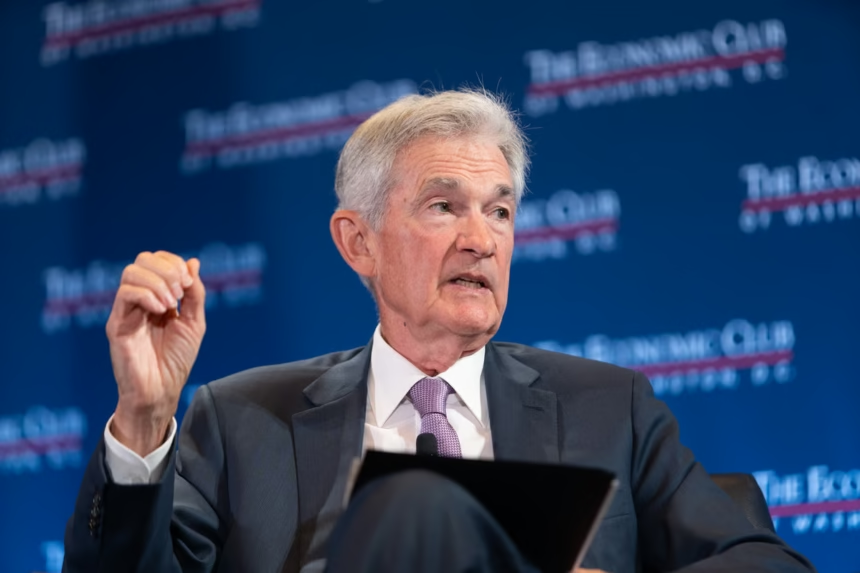
On May 15, Jerome Powell will conclude his tenure as the chair of the Federal Reserve. This change has been anticipated for quite some time, particularly due to his well-publicized disagreements with former President Donald Trump concerning interest rates. Trump has consistently urged Powell and the Federal Open Market Committee (FOMC) to aggressively lower interest rates, whereas Powell has maintained that economic data will dictate the Fed’s policy decisions.
Kevin Warsh, nominated by Trump to replace Powell, is expected to reshape the Fed’s narrative significantly. Warsh brings experience from his previous tenure on the Board of Governors of the Federal Reserve but has been vocal in advocating for a reduction of the Fed’s extensive balance sheet. The central bank’s total assets swelled from just under $900 billion in August 2008 to nearly $9 trillion by March 2022. Despite a partial reduction to approximately $6.7 trillion, Warsh is keen on further deleveraging, believing that the Fed must step back as a market participant.
This stance is particularly concerning for investors, as selling off large amounts of U.S. Treasury bonds and mortgage-backed securities could lead to declines in bond prices and rising yields, thereby increasing borrowing costs across the economy. Warsh’s history as a hawkish member of the FOMC, focusing on inflation and price stability even during economic downturns, implies a preference for maintaining higher interest rates for extended periods. This outlook poses potential challenges for an already pricey stock market that has been hoping for further interest rate cuts.
In addition to Warsh’s possible influence, he will also face a uniquely divided FOMC as he steps into his role. Powell’s leadership was characterized by relatively low dissent among committee members, but the latter stages of his tenure have seen marked ideological divisions—recent meetings featured contrasting views on interest rate policies. The FOMC’s latest meeting yielded a rare occurrence of four dissensions, reflecting a significant shift in attitudes toward monetary policy among its members.
This fragmented environment may undermine the credibility of the Federal Reserve, especially as it navigates through economic turbulence caused by ongoing inflationary pressures and geopolitical tensions. Investors traditionally afford the Fed some leeway when its decisions are supported unanimously, but these internal divisions could destabilize a stock market that has enjoyed a multi-year rally. As Warsh assumes leadership, the stock market may brace for one of its most unpredictable periods yet, fueled by internal Fed disagreements and concerns over potential policy changes.